73 - Beverly Meyer on the Paleo-Primal Diet
Stacy Griffin: Welcome back to Autoimmune Adventures. I'm Stacy, here with my sisters, Becky and Alysia, and today we're joined by Beverly Meyer, a board-certified clinical nutritionist who has been practicing since 1989. Beverly's work grew out of decades of clinical experience and her own journey through chronic viral illness, hormone disruption, anxiety, and serious sleep challenges. She was teaching what we now call the Paleo or primal diet long before it had a name. And she's especially known for her work on sleep, anxiety, adrenal health, and hormone testing. This episode is about understanding nutrition and supplementation in a way that supports real life and long-term health.
Beverly, thank you for being with us.
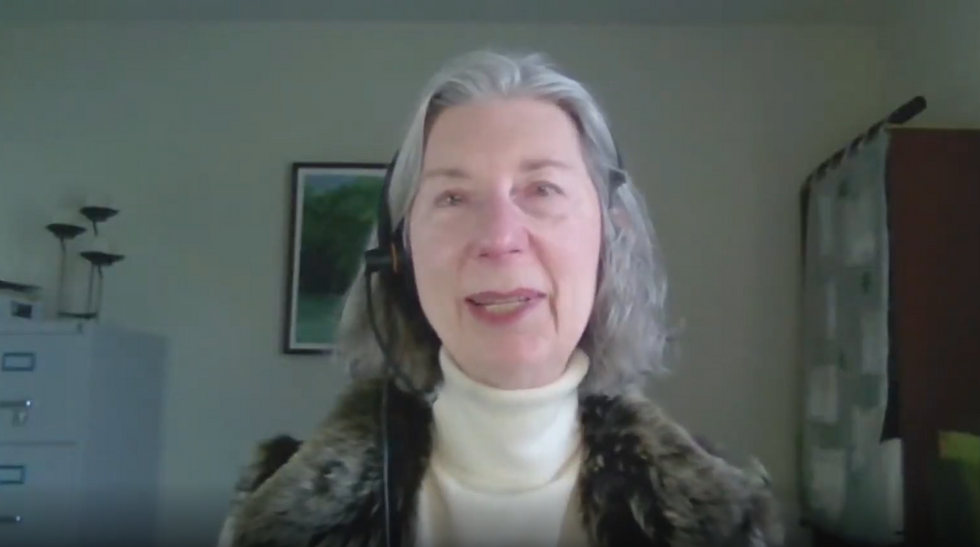
Beverly Meyer: Great. Thank you for having me on.
Becky Miller: Well, as Stacy mentioned, you've been teaching what we now commonly call the Paleo or Primal Diet quite a long time before it ever had a name. What first led you to this way of eating?
Beverly Meyer: Well, interestingly, I had a client come in to see me that was very, very thin. Uh, she was, you know, she was ill. She was in pretty late stage ovarian cancer, but she never wanted to have it diagnosed or treated. She just wanted to be there. But anyway, she said, "What can you help me eat that will make me feel more comfortable or, you know, how can you help me?" And I began researching different diets, like it's a specific carbohydrate diet for one. And eventually I kind of sorted through some things that she said, "Wow, that, that feels, that feels terrific."
And so, of course, I'm doing the diet at the same time because that's one of my things is I don't ask clients to do something I haven't done myself. So, I take those certain lab tests or I do this or I do that. That's just the way that I, I feel responsible about recommending something. Anyway, it, it, it she told me before she passed away that she said, "I want you to know that I have felt better this last year than I have felt in years eating that way." And um, and so that's when I began experimenting and teaching it with all my clients. And I call it "the diet for human beings" because it's it's based on our biology. We're humans. What what did we used to eat before we had farms and kept animals and grew grass to feed the animals? How, we're hunter gatherers and that's what our biology necessitates. And so it's it's based on that.
Alysia Thomas: That's quite a, a that's quite a profound testimony of of it. She said she felt better in that year as she was actively dying of cancer. She still felt better in that year than previously. That's, that is a impressive story. I, I am dumbfounded.
Beverly Meyer: Well, when when we eat the foods that our enzymes, our acids, our timing, our digestion, the different parts of the small and large intestine, when we eat things that they're accustomed to, they're they work better and we're more comfortable and things just work better.

Alysia Thomas: Yeah.
Stacy Griffin: Yeah, I can understand that. It, it does lead me to the question though because we mentioned that you had had some health struggles yourself back in the 1970s. How did that shape how you think about food and healing for yourself and for other people?
Beverly Meyer: Well, I'm, I've been on my own health journey for a really long time. I contracted the herpes virus back in the 70s when I was in college and, and you know the Duke Medical Center, they they didn't know anything about it or what to do, which nobody really did in those early days. Um but uh so, you know, I've always been very proactive in well, what does this mean and well, how can I help this?
And I'm just a very, I'm an an unusually committed patient and person. And I get very frustrated sometimes with clients. I'm like, "No, we've talked about this four times. Why are you still, you know, drinking orange juice, you know, glasses of orange juice? That that's not, that is not a natural food for you or whatever." But it's again getting the foods that I can digest and eat and are comfortable and happen to be extremely important for managing the herpes virus, because paleo, the paleolithic diet the time before we had farms and kept animals and so on. Um, we didn't eat grains. Humans did not eat wheat, rice, corn, oats, barley, rye. We didn't eat those. Th those are grass seeds. And and humans don't bend over and graze on grass seeds. You know, the the elk we hunted or whatever. They bend over and graze;, they don't have to bend over. Their noses are already down there. Um, so that's the the base rule of primal, paleo, ancestral, biological, gaps, the specific carbohydrate diet.
Beverly Meyer: My own DHB, the diet for human beings, that's always rule number one is grains are out. And you know that. So anyway, that that really helped propel my own journey that if, if, if I can figure this out, well, what else can I figure out and how do I pass it along to my clients?
Alysia Thomas: When you were developing this approach, did you feel like you were kind of working outside of the mainstream of medicine?

Beverly Meyer: Well, yes. I had found other diets that were avoiding grains. And of course, I mean, yes, it's, it's all adjacent to um...So my podcast, Primal Diet, Modern Health, that pretty much says it all is that we want to eat the way our biology asks us to do. And we want the best of modern health care, no matter what it is. And and and so it's not like, oh, you can't take that medicine, or oh, you shouldn't do that procedure. I'm like, no, no, that's not what it's about. It's about taking care of yourself and finding to the best that you can, the best of modern health care in your situation right now.
Becky Miller: I think that's a really great definition. I was going to say, and it's funny because like you said, you've been working on this for a while now, but I think a lot of times people hear the term Paleo Diet and they think it's just another diet trend because there's so many diet trends that are happening. Um, how do you help the people that you work with understand primal eating from a clinical, like nutrition, perspective versus, hey, this isn't just a trend?
Beverly Meyer: Well, first of all, I'm, I'm, I'm a very slim person. I've always been a very slim person, but I do work with a lot of people with insulin resistance and and weight and so on and, as well as people like my friend back a long time ago who was underweight for from illness. So, that's the whole spectrum. But it as I tell new prospective clients that write me saying, "Can you help me with this?" Uh, I, I send them to my consult page, but I let them know, look, our a first approach is we're going to upgrade your diet and your sleep. I am not here to, as I say, to pimp pills.
And you know, I'm you know, sure, I can sell you $500 worth of pills and then when they run out, you're off looking for the next thing. So, let's focus on things that change our chemistry as quickly as possible and as broadly as possible. And and when you look at it that way, it's well, yeah, it's what I eat, it's what I drink, it's what I breathe, and it's what I think. When when we get into that a mental state of what did I do, what should I do, what's happening, and and who's going to pay the mortgage this month and all that.
Our nervous system interprets that as a literal threat, a bear, a snake, whatever. That that's how we evolved. That, you know, we weren't cogitating and ruminating on on gee, I wonder if we should use this type of firewood tonight or or did anybody catch a rabbit and you know, whatever. But it's it's a very much more modern disorder of the mental trauma and that activates our immune system as if it were a physical threat.

Alysia Thomas: That makes a lot of sense.
Stacy Griffin: It really does. What do you think one of the biggest mistakes is that people when you see people and they come in to get help from you, they maybe say they're trying to eat healthy, but they're really ignoring those ancestral nutrition principles. So, how do you approach it with them and say, "Look, here's why it's not working. You think you're eating healthy, but...
Beverly Meyer: I, I, I would say that's 95% of people that I, I work with all over the world. And that's why one of the the new client forms I have people fill out. This helps, this helps separate the casual from the committed uh, client as well. It's a week's food and sleep diary and it's it's very comprehensive. Um, uh, anybody can download it from my website, but it, it really helps you see, oh, well, wait a minute. Why? Why? Lunch was 3 hours late today and yesterday it was on time and then I noted that I had a really bad sleep and I forgot dinner and whatever that people can see in writing and often come to realizations themselves as they're writing chocolate again. It's like wait a minute, why do I why am I so hooked on chocolate before bed?
Whatever the situation is. And and yes, people reaching out for alternative medicine or complimentary health or functional coaching, they they are generally more educated and more aware. They wouldn't have found me on the web anyway. Um, and but they may still be eating a lot of yogurt and a lot of juice and a lot of fruit and and and uh a lot of grains and raw salads and things that that I'm like, okay, let, let's, let's revisit that piece. And but again, it's about making a, it's about making that broad statement of what follow the biology. what does your body want? And, and if they're willing to proceed, then you know, then the next time we talk in about 10 days, they do another 7-day food diary, which kind of surprises people.
Alysia Thomas: Yeah.
Beverly Meyer: But I say, "Look, you've got three days to freak out and and be overwhelmed and depressed and then start a new food diary and we can see where did you how did you get on and what days worked and what hours worked and and people usually find it very helpful.

Alysia Thomas: It's, I've done it before and it is help. It's very revealing. It's also surprisingly labor intensive, kind of as you mentioned. And then obviously taking that and and making that shift to a paleo diet is also really I've done it many times and I have fallen off the wagon many times. Um it's a hard one for me to keep on. But um, how would you say that the paleo approach helps um to support hormone balance, imbalance or immune health for those of us that are chronically ill, inflammation, you know, chronically ill.
Beverly Meyer: There's there's a four there's a 4-hour topic right there. But um as I've told you all before, you can get me on any subject and I can talk for hours. But um blood sugar of course is a key metabolic system. It's a very important system. when when we have no food for 3 days or whatever, our our body takes over and and creates, uses its glycogen stores and if it has to muscle and things. So on the other hand, when we've been overeating carbs for too long, which is, you know, to in my mind like in the top five health problems in the United States is, is we overeat carbs all day, every day for too long for years and decades. And we never ate these things before. And they, they mess up our insulin signaling. And people don't know this, but insulin is a hormone. It is a, it is the master hormone. And when you mess with insulin, you're messing with everything. Adrenals, estrogen, testosterone, um, and of course the metabolic syndrome and, and all the things that that come with that.
And when you understand that, oh, you mean I'm not supposed to eat my whole grain handmade super organic whole wheat bread? I say, no, you're, you're actually not supposed to eat that, much less the box of cinnamon rolls that kind of snuck in there, you know. um and it's we didn't eat that. Your body doesn't expect that, and it throws off your signaling s systems um into a basically a state of emergency which becomes a chronic emergency. And as far as immune system, uh in my mind it's well known across the board in the functional health spectrum. Those of us whether you're chiropractors or neurologists or dieticians or whatever you are if you're really working in the functional health the the alternative complimentary health systems we, we have come to agree that the lining of the intestine is the place where autoimmune disorders start and stop. And that's a big statement.
So that thin fragile mucosal lining on the interior of the gut, if when it's healthy and intact and strong, it it's like this. It's like, you know, the Great Wall of China, you know, it the pieces all fit.

Beverly Meyer: And as we get inflammation and candida and bacteria and and weird toxic foods and things down there, these these tight junctions in the gut begin to um open. And when that happens, undigested food particles can slip through the gut wall into our bloodstream. So, if you think about it, it's like tiny little bits of chicken in your bloodstream. Now, that that's a weird thing to say, but but on a microscopic level, that's what's happening. And your immune system says, "Hey, wait a minute. What what's this? I don't, I've never seen this before. And it's it's chicken and it's broccoli and it's cinnamon rolls." But so, the key is we, we pull away the foods that are inflaming the gut. We pay attention to like chronic antibiotics which inflame and destroy the microbiome.
When you need an antibiotic, you need an antibiotic. But most of the times we don't need an antibiotic in my opinion. um and and handle the candida and the other infections and things that are growing on our on our garden wall, you know, and um eat foods that we can digest and that nourish us, then we can start to to heal up that wall. Like people know about glutamine, for example. Glutamine is great for the gut, but it's like painting a damaged, dirty wall. It's not right. You, you have to You have to clean and repair the the gut wall itself before you can feed it to carry on more repairs and, and let it reg and there other nutrients, too. And but, but the here's another thing, another one of my many mods. Your body knows, it knows what's wrong, and it knows what to fix, but sometimes the to-do list, as we all know, is too darn long, and we don't have the raw materials to do that. But it's not a surprise to your to your immune system or your adrenals or it's not a surprise that wow I've you know this insulin problem over here is is making a it's making a mess of things.
So the body knows, and the point of that is a little bit of work in the right direction. That's that broad stroke I'm talking about create can create large effects because the body already knows, "yes this is a problem. Thank you." We don't have to make it fix it. We just need to let it fix it.
Alysia Thomas: That's a really good explanation.
Becky Miller: It is.
Alysia Thomas: And it's funny because I don't I really I mean we're all familiar with what you just said that but there are still a lot of people out there that have no idea about gut permeability. They don't know. A lot of people that are newly diagnosed with autoimmune disease especially, they have not learned that yet. So they don't they really don't know. And that is why it is so important the work that you do to get that out there. And I think that the science is there and it's coming and, and more and more mainstream doctors are starting to understand that the science is hard science.
It's not just people saying I felt better when I ate this way. You know, there's actual hard science. Repairs are being done to this to people's guts when they do these diets. And it's it took a lot of years of me before of me learning myself before I figured that out though. So, it's important to open your mouth and tell people about it because they don't know.

Beverly Meyer: Well, the, there, there were books there were books written on leaky gut syndrome 25 or more years ago. We, we've known about this for a very long time. Um some of the conclusions they've drawn might not have been ideal or but, but we've known about leaky gut syndrome, intestinal permeability. We've known about this for decades. But you're right, the doctors don't teach it. And, and, and it's only the committed patients that that, you know, spend their time researching the web looking for somebody like you all or me. They're somebody that sounds like they know what they're talking about.
Part of my bio motto on my website is to help people with more happiness and comfort and and you know to me that's really important being a herpes sufferer for 50 years that you know, comfort's a big deal and pain and, and, and, and anxiety and sleep and you know these are not comfortable issues and if the one of the reasons why I push people so hard at the beginning is if you can do something big enough, fast enough, you have a chance that you're going to feel the change. Do you see what I'm saying?
And as opposed to here, take these 25 pills and you know, but you're still eating whatever and and thinking and drinking whatever it, it's you you have to you have to to me I have to push people so they can have a chance to have a, a Oh. Oh, I feel pretty good today. What What's happening? And that and then then they can motivate themselves because I'm not going to be around.
Becky Miller: Yeah, I think that's great. And um, I, I was going to say um the stuff on gut permeability that you were talking about. I appreciate that you explained it in such a nice very visual way because I agree with Alysia. I think I know when I learned about it and it was only maybe 10 or 15 years ago, people almost thought it was like woo-woo stuff like you know I, I, I had some doctors that were like oh that's not a thing you know and and like you said there like you and Alysia were saying, there is hard science now that backs that up. So I think that's great. Thank you for giving our audience a really wonderful explanation of that. Um, really quickly, you mentioned that you also work a lot with anxiety and adrenal function and sleep issues. The sleep issues, listeners, we're going to have a whole wonderful episode on that here as well. We're going to have a separate episode on the sleep issues, but would you mind addressing um how anxiety and adrenal function, and just briefly on the sleep issues, how nutrition affects those things?
Beverly Meyer: Well, go back to what we were saying earlier that that when our bodies, minds, eyes, smell, hearing, touch, taste, when when any of our senses become aware or, or observe something, they don't What is that? Is that a stick or is that a snake? Okay. So, this is part of the purpose of our of our sympathetic nervous system is, is to discern what our senses are relating.

Beverly Meyer: Um, I mean, there's a difference between ourselves when we're making big stories out of something like oh no he's my husband's going to get fired and and we'll lose our house and and what are the kids going to do? the kids will be living in the car and, and, and then if you trace that back it's like you had a phone call from your husband saying they sent him home early today. Do do you see what we what we do with our mind but the senses do the same thing. They they want to take a really close look at the possibility of danger. That's, and that's what anxiety is, is that we're not distinguishing uh between a a true threat and and a non-true threat. So that's number one is our our ability and our, our, we must make distinctions about how we speak, how we think.
Um I have a terrific startle response. I mean, the phone can ring 20 feet away and I'm and I, I, I, it's, you know, I, I throw the book up in the air. It's like, you know, I've always had a uh, a very strong sympathetic response to anything. And it's part of why I'm so focused with trying to bring sleep and comfort and lower the anxiety levels in my clients because I know about that. So when your immune system keeps thinking that something bad is about to happen then it it starts, like the person falling, falling they start making blood clotting um hormones to prepare for that and you know all these anti-inflammatory markers just everything gears up to prepare for what it thinks is or is about to actually happen. And that just can play havoc with with our hormones.
Alysia Thomas: That makes sense to me because when you think about it, anxiety, like you said, it's, it's whether it is real or perceived anxiety, they are both causing stress to us, right? And that stress is by its nature is inflammatory, I think. So that's that's fascinating. Yeah.
Beverly Meyer: So, so to then to carry that through. Okay, that's gets some perceptions. But then there are nutrients that are really useful for this to help kind of okay, let's all ourselves everybody just just calm take it down a notch. Okay. And uh, one is the herbal tincture passion flower, and it's one of the top sellers in my online store. I have people ordering, you know, five, six bottles at a time. So they can keep one under the pillow and one in the car and one in the kitchen and one at work and you know, it's like anytime they they, you know, real or perceived, they're, they're like, "Oh, wait. What? There I go. Let's take some passion flower and just take it down a notch. And there are capsules of passion flower, but you may not want a whole capsule if if you're going to go and talk to your boss at 2:00 because then it might make you sleepy. So that's why we like tinctures is that it's you can you can gauge how much to take.
And the other nutrient - and passion flower works with this neurotransmitter as well. And that's the neurotransmitter GABA, G-A-B-A. And I have a lot on my website and podcasts about this neurotransmitter GABA. And it's equal to serotonin in a lot of ways, but it's but it's not the same as serotonin. But there are forms of nutrients and forms of GABA you can take that will address that neurotransmitter that to me all of us in modern life were pretty much all deficient in GABA. And doctors have been pushing serotonin for decades since it was discovered and easy to prescribe. And and GABA just gets, gets GABA gets no love. That's where I was trying to get to is something called pharma GABA, like pharmaceutical so it's different than regular GABA in the store you'll people can find it on my website or just search it pharma GABA and boy you take that in bed and it's it just your mind just says oh heck Let let's not let's not worry about the dog right now, you know. So, and then you can sleep.

Alysia Thomas: Thank goodness.
Stacy Griffin: I think it's amazing the things that cortisol does to our bodies. I know it's a necessary hormone for when we really need it, but I think it really messes us up when we are not in need of it. Um, backtracking just a little bit, I wanted to talk about why protein quality and fat balance are important in a primal diet, particularly for women as we age. Um, could you maybe explain a little bit about why that matters?
Beverly Meyer: I don't know about as we age, although we do know that, that I'm in my 70s and we know that when we get up and to my age bracket, we tend to get thin, we lose muscle, we need protein. Follow the biology. I mean, if if we're fishing and smoking and drying salmon and and gathering nuts and berries and whatever tubers or things that we may find or the occasional egg, you know, we're we're used to having proteins and animal fats. or if we were equatorally based, you know, you on your globe, you've got you've got the equator and people living in the warm zones and then people living in the colder zones. So, the it's easy to get saturated fat when you live where it's cooler because that's what the the the animals you're hunting and the the fish and the elk and all that, they have fat. The bears, they have fat. But when you're equatorial, you don't have bears and salmon, but you do have coconuts. So, coconut oil is is an excellent um, it's an excellent fat for for us because it's saturated and monounsaturated.

And if you're a a person living 100,000 years ago, you've got furs, you've got spears, you you, you hunt, you store food, and one of your most precious things is the fat that you've harvested from an animal that may carry your whole family over when it's two weeks of ice and you can't hunt. So, you know, we're very attracted to fat. And on the other hand, the keto diet, in my opinion, is completely wrong. It's that diet is completely based on fat. And that's not biology either. Um, so I am I don't go with with keto at all. And and paleo, primal, ancestral, my diet for human beings, like let's do a balance. So, here's a quick way to tell my clients.
You, you, you take your dinner plate, you put your serving of protein on there, which is kind of like the size of your fist, and then you put two servings of, of cooked vegetables on the plate. And that pretty much fills your plate. Now, you can slide some sweet potato or potato on there. And then you're going to put some fat on everything. Put some butter, some ghee, some coconut oil. Maybe if you're lucky enough to get pastured, fully pastured meats, you've saved the fats from that and now you're going to cook with that or season with that. And and to me, I just I add the pink salt, which is like Himalayan. It's a little bit different. Um, and, and, and you're good to go. You've got proteins, fats, vegetables, and everything else is a condiment. Fruit is a condiment. Eggs are a condiment. Um, rosemary is a condiment. Olives and tapenade like crushed up olives. That's a condiment. And you take your your basic template of protein, couple of cooked vegetables, fats on everything, some high quality salt, and then you can dress it up with hot sauce or garlic or whatever you want to do that, that makes, makes that meal different.

Alysia Thomas: Yeah, that makes sense. And I'm just as you're talking I'm wondering, would you recommend a Paleo diet to everyone or just those that are really struggling with autoimmune conditions?
Beverly Meyer: Follow the biology. I, you know the if you're a human, you should be eating like a human. You know, we're not crickets. We're not wolves. We're humans. We have our own set of teeth, our own enzymes, the huge production of stomach acid that we make. We, we, you know wolves and and cats, and you know we we make a lot of stomach acid because we're expecting animal protein. You know, horses make stomach acid, but they don't make a lot, because they're not expecting to eat hamburger and you know, so you just you follow the biology.
Alysia Thomas: Mhm.
Beverly Meyer: And yes, if you're an athlete or a newborn or 90 years old or whatever, there there's always going to be adaptations, but, but yes, I think we're we're born to be uh hunters and gatherers and we do the best we can to afford the highest quality and then supplement things from. from there.
You know, if beans don't bother you, eat some some beans. If this doesn't bother you, eat that. But it's nuts and seeds. If they don't bother you, eat them. Now, for those of us on my herpes diet, which is very, very specific, we we can't eat nuts and seeds because they're so high in arginine. Um, so that's a big portion of my website now is, is devoted to um protocols and diet and things for herpes. And it's such a huge niche. And I realized this about eight years ago. I said, there's a tremendous niche out there for the herpes virus. and why don't I start writing about it?And um so it's, it's been very successful and very rewarding to help people when they say, you know, I've only had one outbreak this year instead of one a month. I can't thank you enough. And my husband says hello, too. you know.
Alysia Thomas: That's awesome. I love hearing that. Um, a little bit of a switch. I live up in the north. It's cold. It's gray. I have autoimmune issues. So, I take vitamin D every day. And um, you talk a lot about emphasizing how important it is to pair it with K with vitamin K. Can you talk about that for just a minute?
Beverly Meyer: K. Yes. K2. So the just like the B vitamins B1, B2, B6, B12, B9, so on. The the K vitamins have have several of them. Um K1 is a, is a that's where the K comes from is a German word for clotting starts with K. So K1 is very involved with blood clotting like hemophilia where they don't clot blood, for example, or uh other people that have too thick sticky blood, they put them on blood thinners, which is a whole other story, But K2 ,K2 is a terrific, it's my favorite vitamin I love K2 , so let me give you a a little anagram here so think of a capital K and I'm going to say three words and start them all in your mind with a capital K: K carries calcium. K carries calcium. So, when you take vitamin D3 with vitamin K2, you've got a a little package that's going to pick up the D and takes it over to where it needs to be in a bone or a tooth or a nerve and drops it there. When you don't have K2, vitamin D just flows out into your bloodstream from digestion and sort of lands wherever it lands. And guess what? That's inside your veins and arteries. You don't want vitamin D in your arteries. This is what causes narrowing of the arteries. One of the reasons is they that they're they're full of of calcium that wasn't transported to the correct place. This is more advanced than, than you thought you were going to ask and get into.

Alysia Thomas: I'm fascinated. I'm fascinated. I, I'm, I'm here for every bit of it.
Becky Miller: Me too.
Beverly Meyer: So, so it's really important to have D3 with K2. And um, and of course they're both fat soluble vitamins. So you need them with a meal with fat. So don't take them at bedtime or don't take them with an apple. You want them with a meal with fat. They are fat soluble. Okay? It's like your detergent in your washing machine. It's it's water soluble. But vitamin D and K2 are fat soluble. So they need to be with with meals with fat.
Alysia Thomas: That is something I didn't know. And I've been taking D3 for years and I do have it with K2 and I've been taking it for years, but I did not know that you should eat it with fat.
Becky Miller: Yeah, I didn't either. And same thing, I've been taking it for years. I have a tendency to get low D apparently.
Beverly Meyer: Absolutely.
Alysia Thomas: But it makes sense. It makes sense. It's a fat soluble vitamin. That makes total sense. But nobody teaches us this stuff in high school. Nobody teaches us stuff in college. Like we don't learn this stuff.
Beverly Meyer: I know and this is why when clients say I, I just need a quick consult to ask this these two questions and I say...
Alysia Thomas: No such thing.
Beverly Meyer: ...say not with me there's no such thing, because you know, you, I want you to understand what is going on. It's not complicated, but if I can help. Oh, that makes sense. Then we don't have to talk about it anymore.
Alysia Thomas: I really I really think that nutrition should be a required class for all high schoolers. I really do.
Beverly Meyer: Well, except what are they going to teach? That you know, your your best foods are apples and oranges and salads and and milk and you know...
Alysia Thomas: I, I will say I did see they have a new a new inverted food pyramid.
Beverly Meyer: Yes.
Alysia Thomas: Did you see that? I just saw that yesterday.
Beverly Meyer: Yes.
Alysia Thomas: My friend showed me, and I'm looking at it, and I'm like, "I, I suppose it's better than the last one, but it's still not quite right."
Beverly Meyer: Well, it's yeah, the, our food secretary is is promoting that and and yet it's, it's, it's extremely similar to the paleo and the primal food pyramid where your animal protein is at the bottom and then your vegetables, vegetables, vegetables, vegetables, vegetables. And then you go up from there through the the nuts and seeds and the eggs and the spices and the mushrooms and whatever, Fruit is fine but it's a condiment. It it's what you add on the top or the side of your full plate.

Stacy Griffin: Well, I love that you mentioned that because I mean obviously fruit is very appealing because it's so sugary, but there in lies the dilemma, right? There's those, there's a heavy carb load with fruit that we don't often talk about.
Beverly Meyer: Like you say now, it',s it's you know it's it's not what what we need to base to base a meal on.
Alysia Thomas: I love that you put it in the terms of calling it a condiment. That's a mind shift. I'm I'm going to make that shift in my mind using it as a condiment. And I think for anybody who's ever tried a paleo diet or done or is doing able to stick to when I do it, carrots taste like candy to me. You know what I mean? Like fruit tastes like a treat.
Beverly Meyer: I do.
Alysia Thomas: It tastes like a real treat. And so I think that, you know, people who are used to eating the standard American diet with all of our processed carbs and all of the funky preservatives and all of those things, it really skews our taste buds. And when you get back to whole foods, real foods, when you have that raspberry, you're going to taste it like you've never tasted it before. And it's going to be the most amazing raspberry you've ever had.
Beverly Meyer: Yes. The the the That's a great point. I'm glad you brought up that that our taste buds have been trained by chemicals, okay? They're they're not I mean even in baby food okay you know they've added extra dye or extra sugar or extra whatever uh so you know we are drawn to sweets but then again you know you have babies that are trained to eat kimchi right off the bat. So, you know, it's um the the the taste buds are are trained by our parents, but also by the chemicals in the food.
Um, I used to live in Atlanta and the headquarters of Coca-Cola is there and and this was eons ago, but you know there's this huge Coca-Cola tower at that time and that dominated the Atlanta skyline and and I remember looking at it one day and saying, "Well, they're not necessarily manufacturing in there, but what are they doing on 40 stories?" Okay, you have accountants and this and that, but you can bet there's a lot of footage devoted to um, um chemistry, tinkering. What will make um, um, uh, what's the term when you have 20 people drink Coke A and 20 drink will drink Coke B and then you get feedback on that, and you know, which group uh described this as exactly perfect sweet and which group described this as you know ooh too tart on the tongue whatever and then they go back and tinker with the chemistry, and you But you're not required to list those ingredients, and you can't on a can of Coke. I mean, it would have a giant paper label a foot long attached to your Coke.
So, people are not aware that it's Yeah. Okay. It's It's high fructose corn syrup, but and caffeine, but uh and food coloring, and but what else is it? It's a lot of chemicals...

Alysia Thomas: Things that our body was never made to work with.
Becky Miller: exactly. Well, Beverly, we so appreciate you being with us today and for sharing your experience and your perspective. Um, as we're winding down, what is the best way for our audience to learn more about you and what you do?
Beverly Meyer: Well, the website you can you can search my name Beverly Meyer nutrition or health and and you can find me that way. But my website is On Diet and Health, OnDietAndHealth.com and my podcast is Primal Diet, Modern Health and that's been around 14 years. So um, those are and I do actually I'm very active on Pinterest. So, if people are still using some Pinterest that On Diet and Health, there is a terrific amount of of stuff there that that will catch your eye like, "Oh, yes, I want to know about that. Oh, that's right. Passion flower. Oh, feeding my cat raw food. Oh, you can you can scan quickly through a lot of topics that way." Um, so I just I like it.
Becky Miller: Okay. Yeah, we love that, too. And we'll include um your websites and your social contacts um in our show notes for our audience. For everybody watching, listening...
Beverly Meyer: Great.

Becky Miller: We'll be back with Beverly talking about sleep with her, sleep apnea, and options that um many people don't even realize they have for that right now. So, be sure to tune in. And thank you again, Beverly, for spending time with us today.
Beverly Meyer: Yeah, and thank you all. You're doing a great job and, and working it all out between the three of you and and that's not easy. And I hope people appreciate how, how hard it is to to organize a podcast, make it successful, have good guests, and, and you know, there are tricks to this and y'all are doing a great job. So, thank you.
Becky Miller: Thanks, we appreciate that.
Alysia Thomas: Thank you.
Becky Miller: And to our audience, please remember that you are worthy of joy. Disease does not define your life. You do.
HELPFUL LINKS:
Beverly's Website: https://www.ondietandhealth.com/
Beverly's Podcast: Primal Diet-Modern Health on Apple Podcasts, Spotify, and Podurama - https://www.ondietandhealth.com/resources/
Beverly Meyer Functional Health Coach on LinkedIn
Beverly Meyer On Diet & Health Facebook and Pinterest


Comments