74 - Medical Gaslighting, Self Trust and the Chronic Illness Hotline with Cyndii Sinex
Becky Miller: Welcome back to Autoimmune Adventures, where we believe no one should have to navigate chronic illness alone. Today's conversation is about being unseen but then choosing to build something that ensures others will not be unseen. We're honored to welcome Cyndii Sinex, MH, public health practitioner, health educator, and founder of the upcoming Chronic Illness Hotline. Cyndii built her career around resilience and health education. But after more than a decade of navigating misdiagnosis and medical errors herself, advocacy stopped being theoretical and became very personal. Now, she's blending professional training and lived experience to amplify the voices of those often overlooked in health care, especially people living with chronic illness, injury, pain, or neurodivergence. Her message is simple and powerful. "Diagnosis or not, self diagnosis is valid before, during, or after. You matter." Cyndii, we are so grateful you're here with us today.

Cyndii Sinex: Thank you. I'm so glad to be here.
Stacy Griffin: Before we talk about public health or the hotline, kind of tell us a little bit about who Cyndii is at her core.
Cyndii Sinex: Well, I am a person who loves to be there for my friends and family. I am very much an introvert. I am full throttle neurodivergent and embrace it. I am a member of all of the communities that we serve. Um, and I am rebuilding my life after the health care system got a hold of it. Um, and I love to be able to share my joys. I want to be able to prove to people that you can build uh, a dream life after surviving nightmares. So that's what brings me here today.
Becky Miller: So Cyndii, you built your career around resilience and health education. And when did you find that that knowledge became something you were relying on personally - given, like you said, some of the things you had to deal with with the medical uh, field?
Cyndii Sinex: So, I w, I went to college to become a health teacher. I was the little child who always lined up her stuffed animals and played school teacher. And I um, finished up my undergrad degree. I'm the last school health graduate from the University of Maryland. I went into school health, and I knew that I wanted a master. So, I got a public health masters as well, knowing that I wouldn't necessarily use the public health nonprofit kind of uh, government work. I wanted to take it into the school system, and I worked at the school. I was a classroom teacher, but I also worked at the school board. I certified the K through 12 teachers to be able to teach family life and human sexuality.
Um and I was very big in alternative education and looking to move into that where you take kind of um, I was a special educator, but uh you take the special education aspects and instead of it being for a special education diagnosis it's used for environmental factors. So something's traumatic happening in their lives and you help these kids. So resiliency was my jam. I wanted to be able to really help these kids. And then I got sick, and I was fired, because my paperwork couldn't show the proper diagnosis, and I ended up losing my home, because I didn't have income and I couldn't get disability because I didn't have the proper information.
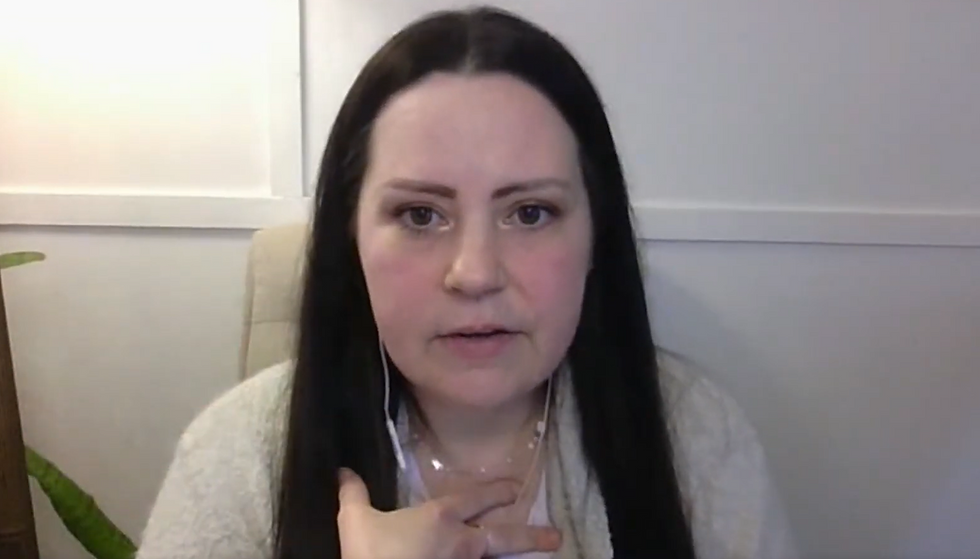
Cyndii Sinex: And I learned very quickly that I needed to be able to stay positive when everything around me was crashing down. My health was failing. Um, I couldn't walk. I couldn't breathe. I was having all these adverse um, reactions. The medications they were putting me on were changing my personality. I was losing friends, losing family members, um support. I um lost almost everything, including my life several times. And I credit my, a lot of what I learned at the University of Maryland, with being able to keep me um, being able to kind of not end up homeless. Um being able to get myself uh, free health care and to be able to navigate our health care system, and to really continue to advocate for myself when I was being told I was a liar, and I knew I wasn't. Wasn't expecting that. Always wanted to use it for others. Um, but it has now been my saving grace.
Stacy Griffin: Thank you for sharing that. Um, not to the extreme that you are discussing, but I had to leave the school system as well for those same reasons.
Cyndii Sinex: Oh, that is a grief that stays in your heart, because those are your babies.
Stacy Griffin: So it, it is hard, it is hard when you love the kids. I, I tell people you don't become a teacher for the money. You become a teacher because you love, love teaching.
Cyndii Sinex: Yeah.
Stacy Griffin: You love working with people. And so when your people are taken away from you and you're thrown into a state of really like...I, I felt lonely.
Cyndii Sinex: Chaos.
Stacy Griffin: So lonely. It's so lonely.
Cyndii Sinex: Yeah, you you...I lost my purpose like overnight, and the I didn't realize how big of an impact the daily little interactions were.
Stacy Griffin: Yeah. I don't think we always understand how that works.
Cyndii Sinex: Yeah.
Stacy Griffin: So you navigated over a decade of misdiagnosis and medical errors....
Cyndii Sinex: Two, two decades with two decades with like the wrongful treatments that were making...
Stacy Griffin: Two decades apparently.
Cyndii Sinex: ...everything worse and then it ended up being 40 years. I had a surgery and had complications as a child and nobody ever caught it, and it kind of you know wasn't something that any other person would have, um but yeah and that learning 40 years in that everything has been lie or this is what it felt like or that wow I did have struggles. I thought they were normal but when you're a baby and then a toddler and it's all you've ever known, you, you know you don't know, so...
Stacy Griffin: Yeah. I think that we don't really ever pay attention to the level of resilience that we maybe have until we're talking to someone and they're like, "Oh my heck, you've gone through all of that and you're like,"Oh yeah, I have."
I had an experience when I was seven years old where I nearly died and I know that that was the beginning of what triggered all my autoimmune disease, because that kind of a crisis at such a young age.
Cyndii Sinex: Okay. Oh, yeah.
Stacy Griffin: Um, but several people I know have similar stories where, you know, "I had a surgery when I was young or I had a really bad illness when I was young. Um, and things weren't handled in a way that was going to lead to me being okay years later."
Cyndii Sinex: Yep. Yeah. I didn't realize how bad it was. People just brushed it off. Oh, that's just so and so and how they are. And then you become an adult and you're like, but that's not normal or right. We shouldn't have people need to persevere through that kind of stuff. That's so common.
Stacy Griffin: Exactly.
Becky Miller: It is. Well, and you touched on this a little bit, but can you kind of give us more of an insight? I mean, it must have been incredibly frustrating to be trained in health the way that you were and and to understand the system, but obviously not have the system understand you.
Cyndii Sinex: Yeah.
Becky Miller: Like, you still were feeling unseen within the system.
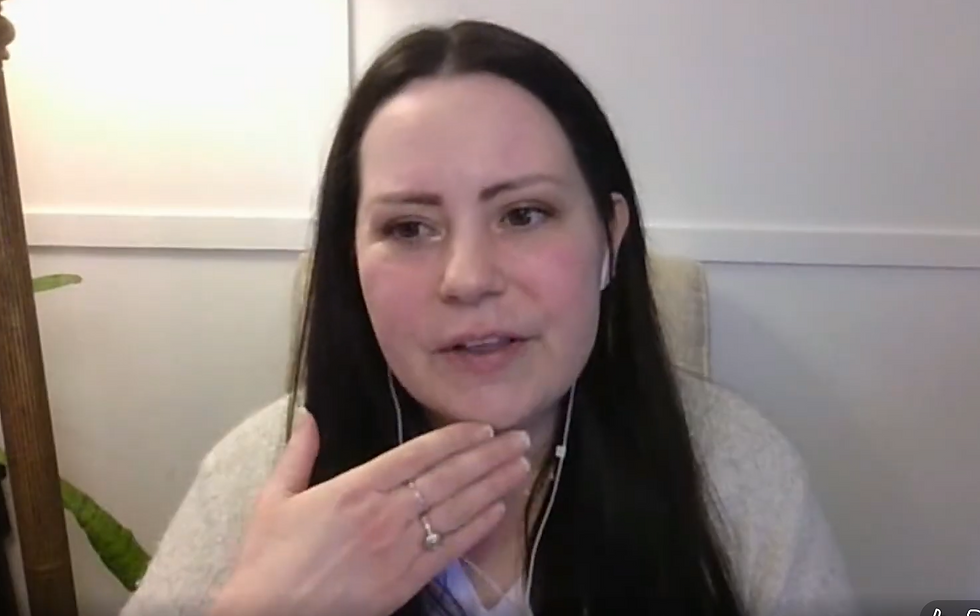
Cyndii Sinex: Yeah. And a lot of times I hoped that it wasn't, but it sometimes felt like that was used against me that they were like, "Oh, you think you're so smart because you're educated on this, but you don't, you know, you're not a doctor." And I'm like, "Yeah, but you should care about what I'm saying." Um, so it was, you know, a, the double-edged sword because it knocked my professional confidence. It took years to rebuild that.
Becky Miller: Yeah. And that's actually something we've heard from a lot of people too is that, like you said, can be being educated. Being educated I think is still the best option, because it's easier to advocate for yourself when you're educated.
Cyndii Sinex: Yeah.
Becky Miller: But there are situations where being educated, like you said, people target you and it's like, "Well, you think you know so much, but you know, you're not A, B, and C." And it's like, "But hey, you're not in my body."
Cyndii Sinex: Yes.
Becky Miller: Nobody's in your body, but you. You know your body best. So, yeah, we can understand how that would be frustrating. And I'm, I love that you took your experience over decades of frustration and said, "How can I turn this to help other people?"
Cyndii Sinex: Yeah.
Becky Miller: Your passion about amplifying marginalized voices in health care is just awesome. Who have you found as you're as you're doing this as you're working on this project for this chronic illness hotline? Who do you find tends to be marginalized the most?
Cyndii Sinex: My gut is to say African-American community, especially women, especially uh, the racial bias that occurs in our health care system. Um, I am from outside of DC and I grew up within the African-American community. So, it is always in my heart, the maternal black death rates through the roof infuriate me. Um, but in the same light in our community, we still see the disabled community, especially wheelchair users, have a hard time navigating the world. We have those in pain that are brushed off. We have people struggling to be able to get their diagnosis in the illness community and the neurodivergent community. Though that they have just become so powerful and loud now it doesn't mean that they're getting what they need to be able to survive. all five communities, all of our uh, you know trans community, it's it's this our entire you know community, all of the communities together really kind of echo this huge shift that needs to occur.
Stacy Griffin: All right. For someone who's feeling dismissed or gas lit medically, because I think all we've all been there, right?
Cyndii Sinex: Yeah. Yeah, it's like it's like a right of passage when you go into this step into this community at this point.
Stacy Griffin: You're right. It is a right of passage.
Cyndii Sinex: It shouldn't be, shouldn't be. but it's it, it is. I have never heard one person be like, "Oh, everything was great. It worked out perfectly."
Becky Miller: I know. Same. Like if you hear somebody that like the very first doctor they go to actually listens to them, you're like, "Congratulations. You are literally an anomaly," you know.
Cyndii Sinex: Can, can you can you please send that this way? How did you work that magic?"
Stacy Griffin: Yeah.
Becky Miller: Yes, exactly.
Stacy Griffin: So, with that in mind, with that being that right of passage that we all have to deal with, what would you want them to hear today from you?
Cyndii Sinex: I want them to like within their own quiet still moments repeat to themselves, "I'm telling the truth. I will continue to tell the truth, and I will find someone who will help me." Um, I always used this mantra. It's a, it's a stolen mantra, and I wish I, I, I don't know exactly who it was, but you know, "I will not let the bitterness steal my sweetness." Um, because it's very bitter and it's very hard um and to find your people. I hope that soon enough, end of this year hopefully, um, that the hotline is available to be the people you need whenever you need us. um until then and even once we're there, you deserve a larger support system. So to find an an advocacy group online, a support group online, a local community, um just putting yourself out there looking for folks if you see someone speaking about that online or in a conversation, introduce yourself. Um that kind of the power of peer support and having someone be able to say, "Oh, I get it." um is about the only thing that's going to carry you through.

Becky Miller: It's true. It's huge. We, We are all like you said, how you're involved in a lot of the communities. We are also involved in a lot of the online communities, and, and basically the similar reason that you're putting the chronic illness hotline is why we decided to do a podcast as sisters. We knew we had our own kind of built-in support system, but we knew so many people who weren't getting believed, weren't getting heard.
Cyndii Sinex: Yeah.
Becky Miller: And it, it is like you said, community is so important.
Cyndii Sinex: Yeah.
Becky Miller: So, can you share with our listeners the moment that kind of the Chronic Illness Hotline was born for you?
Cyndii Sinex: I can.
Becky Miller: Like what sparked it?
Cyndii Sinex: So, as I said, so my background is in public health and I knew um kind of in 2017, 18 that my health was kind of stable. I thought I had gotten the answers, but I had enough answers to where I wanted to kind of move back into employment. Uh, being a like entrepreneurial or being able to set my own hours was a must. So, I was like not going to go back into education. Um, but I want to be a, I thought that I would um make my own like homeschooling health education materials um, and to kind of launch into that.
So, I was happy to jump back into public health. And in 2019, I saw a comment on the internet that was talking about a uh, new hotline um for a community and a light bulb went off that was like, why don't we have our own hotline? Oh my good. the veterans, trans, LGBT, uh there's parenting, there's so many hotlines for so many people. We're a huge community. We need it. So, that was uh, fall of 2019, and I just decided I was like, I'm going to, I'm going to do it. That's what I'm going to do. Um and I really, um started working on the behind the scenes. I actually uh got a mentor who was like, "You need to volunteer with a hotline so that you learn. You can't do what you don't know." Um and so I started that, and when the pandemic kicked off, I actually we launched just out of nowhere a pilot program for the chronic illness hotline. We've had us, we had a two-year long little program. Um, but it wasn't set up appropriately as far as like being able to take in donations and really be able to grow and scale that we needed to. So we paused that at the end of the um, public health emergency.

Stacy Griffin: I, I'm just so excited. And I want this to happen faster than it is.
Cyndii Sinex: I know. Yesterday, we needed it yesterday.
Stacy Griffin: Um, I love that you say, "diagnosis or not, self diagnosis valid before, during, or after you matter." I love that so much. Why was that language so important, do you think?
Cyndii Sinex: Oh, being someone who went so long without the answers, I knew that it um, it echoes through almost everyone. Like we were just, you know, speaking about how like nobody kind of gets it the first time around. And so being able to say like, you know, the hardest part is all of it. It's not before, during, or after. It just changes how you're dealing with things.
And unfortunately, the older we get, the more that our bodies kind of, you know, I break down or become struggle more. You have less energy. Um, so like it only changes. It never goes away. Um, as someone that couldn't get a real diagnosis, self diagnosis is really important to me. Those kind of things helped carry me through and I was able to start learning from others who had that diagnosis, how to change up my life and how to advocate for specific things that I needed. Um, so I have um no problem with, you know, taking on anyone who identifies themselves as someone struggling because of their health.
Um, I say, you know, that like you're on the fourth day of the flu and you're typically a really healthy person and you're scared. Hit us up. That's what we're there for. Even though your flu is going to go away, hopefully. Um, you know, we're there for the person that's terrified to make their dental appointment. Um, that's part of your health being able, you know, it might be a routine examination, but if you're putting that off, that's putting your health at risk. We want to be able to champion and help you do that. We'll be right there for you while you make the appointment and we'll celebrate with you afterwards. Sometimes just saying, "I'm scared. I'm worried. I, I had a biopsy. Uh, everyone says it should be fine, but boy, that doesn't help." Um, we'll be there for anyone.
Becky Miller: I think that any of us, even when we have very loving family and friends, like you said sometimes when you worry it...
Cyndii Sinex: Yeah.
Becky Miller: ...it kind of gets to a point where they're you know they love you but they're like, "Okay, just don't worry," and it's not like saying 'just don't worry; is going to turn it off and so having somebody...
Cyndii Sinex: Yeah. it dismisses you. It makes you feel worse sometimes.
Becky Miller: Yeah.
Cyndii Sinex: They don't mean to, but it just isn't as helpful.
Becky Miller: Exactly. Well, because they think they're helping, because they know you're stressed out.
Cyndii Sinex: Right.
Becky Miller: But sometimes just having somebody that will listen to you and say, "Hey, this is why I'm stressing." That gets it.
Cyndii Sinex: Yeah.
Becky Miller: That's that is wonderful.
Cyndii Sinex: And it's a good it's a good thing to worry. It means you care about yourself. It means that you're not being numb and ignoring things that are important. So like we celebrate worrying. Tell us all day long why you're worried, because it's normal and natural. And don't push it down or ignore it.
Becky Miller: I think that's great. Very helpful. So, of course, the big thing that we want to talk about now is how can people get involved? How can they donate and help get this amazing resource going for us?
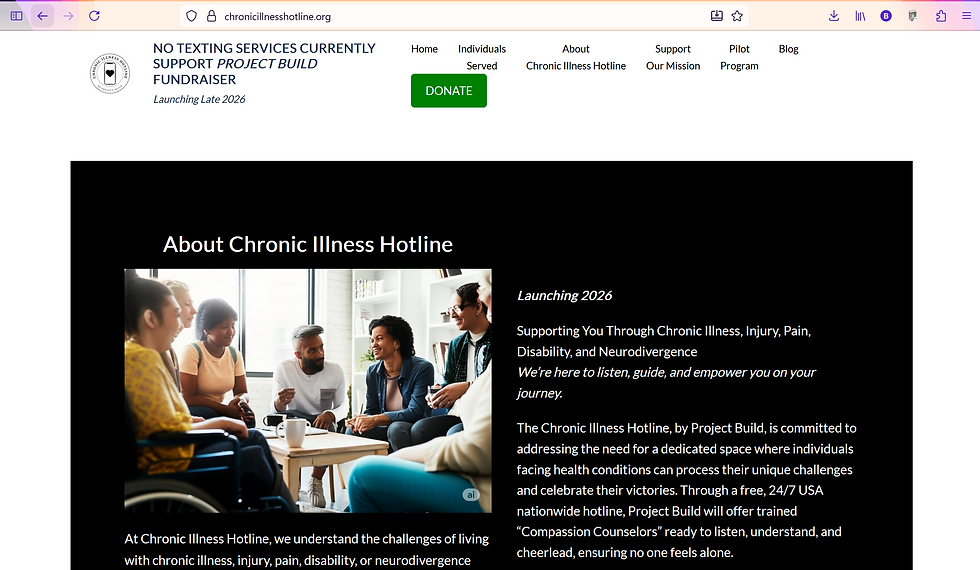
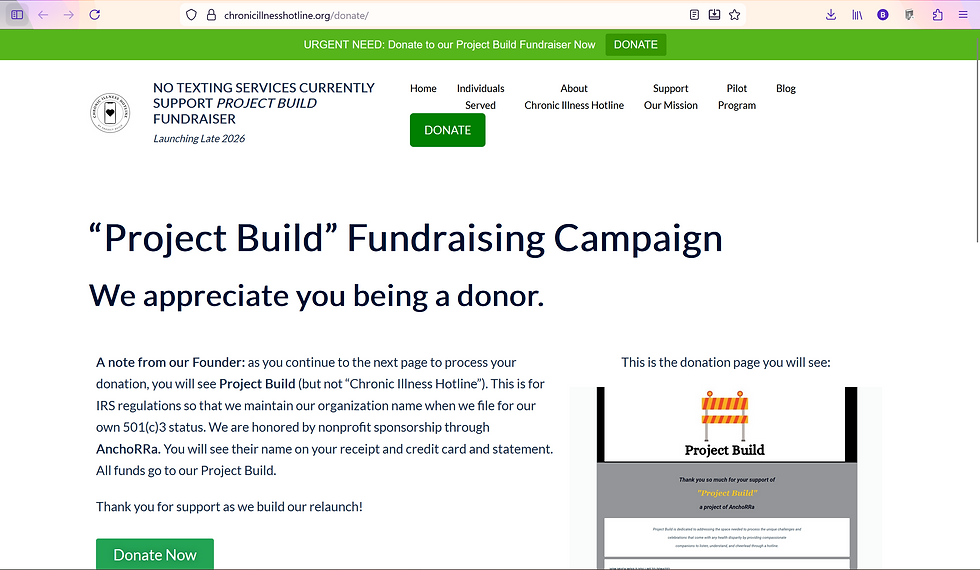
Cyndii Sinex: Yes, donations can be taken on our website.We are currently under a fiscal sponsorship which is an amazing opportunity for a nonprofit like us grow so big. Data security extremely expensive. Being a 24/7 resource extremely expensive. Mental health crisis and needing to have medical professionals on staff supervising round the clock, extremely expensive. We would love to be able to pay our compassion counselors giving people flexible part-time understanding compassionate work it could be life-changing for so many people in our community, very expensive. So the fundraising piece we need to be able to have our community rally around. If you can donate, jump on our website. Um there's a portal there.You're making a donation to our project build. Um and once we raise our startup costs, we will kind of split off into our own nonprofit. We are very thankful for our fiscal sponsorship with AnchoRRa. This is what they do. They wanted to be able to provide these uh life-changing resources that are missing. Um so you will donate to them. all of the funds come to our project and we will be able to use them to grow step by step.
Cyndii Sinex: These beginning founding donations are like revolutionary to us. Um so being able to give is amazing. If you can't, we understand, especially with the economy, especially with those in our community, supporting our social media is going to make a huge difference for us. like I, you know the more followers we have the more realistic it is that our community is behind us. We are on Instagram, we, we are on Instagram we are on Threads we are on Facebook and we are on LinkedIn. um and being able to interact with our posts, especially those that talk about donations, especially of those that are asking donors to go to our website and it has that link to our website, which is so helpful for donors, but algorithms do not want you to leave their beautiful platform. Um, so sharing those is uh, helpful and introducing us in the comments of other people that are having a discussion about health care or they are an influencer or you know, they're talking about a family member and they're trying to find answers, introducing us there helps being helps be able to spread our me mission.
That is the biggest thing that we need right now. Thank you for this podcast opportunity. We're starting our PR tour. It's a kind of a missing piece that we know is going to be able to have our community be like, "Oh, she's trustworthy." Our team is um experts. Our first goal in um you know, our next kind of fundraising goal is to be able to expand our volunteer team. We are maxed right now and being able to grow that means more opportunities for um us to take on professionals and people that want to help us. Um but yeah, this word of mouth, let's light this world on fire and have everyone in our community know that this resource is out there. And uh we've seen so many communities raise millions of dollars very quickly and we're hoping that that happens with us.
Stacy Griffin: We're extremely excited to be part of this journey with you. I, I can't even begin to tell you how happy we are that you're here with us.
Cyndii Sinex: Thank you.
Stacy Griffin: Um I'm going to ask one final question. If someone calls the hotline, when we finally have this beautiful hotline up and running, when, when you notice I say 'when' this happens, um if someone calls and they're feeling completely alone, what do you hope they feel when they, before they hang up?
Cyndii Sinex: I hope that they feel like they have just had the best little gab session with the most supportive, uplifting friend. Um, I really want them to take away that they deserve a space where they're understood and they're celebrated. they have a space that they can be real and honest and it's confidential and it's safe and it's secure and they are able to kind of use us as a dear diary. Um, our pilot program we had so many people that were like you know I just have never said that before and I definitely or I've said that before and I didn't get this supportive reaction. Um, and that's just a powerful change. Um, that I don't think that people like support groups are great and there's a lot of online conversations that help you, but to have someone focused only on you, and our volunteers or our compassion counselors when we do get up and running again, you're giving them something by using our hotline.

Cyndii Sinex: It is powerful. So all of us walked away from our pilot program, not even, you know, like we just jumped in and did it and then we kind of sat back and was like, this is so powerful for all of us. It changed our hearts and who we are and how we looked at the world. Um, and so it's a blessing when someone chooses to confide in us or to use our services. And I, I want them to always remember that. It's not a, oh, I'm bothering them. No, we, you know, this is why we're here every shift.
Stacy Griffin: Love that. Well, thank you so much for coming and sharing your lived experience, including the painful and complicated parts because it's always good for people to know that they are not alone, and transforming it into something that's going to hold space for others.
Cyndii Sinex: Yep. Thank you so much for having me and thank you to the audience for checking out this episode.
Stacy Griffin: The chronic illness hotline is more than a resource, everyone. And it's a reminder that no one should have to process chronic illness in isolation. And to everyone listening, if you've ever felt dismissed, minimized, or told everything looks normal when you knew that it wasn't, we see you. And spaces like the one Cyndii is building exist because your experience does matter. we'll include all of her information, all of her social connections, everything you need to know to support her in whatever way you can. As she said, that social media following is huge. So, I'm, money isn't the only way you can support this.
Cyndii Sinex: Yeah.
Stacy Griffin: But let's get this off the ground. I'm, I'm excited to see this off the ground. We'll include everything you need to contact her and stay connected as the hotline launches this year.
Cyndii Sinex: Yes!
Stacy Griffin: We're going to we're going to believe it into being.
Cyndii Sinex: That's right. It will.
Stacy Griffin: And always, as always, you are worthy of joy. Disease does not define your life. You do.
HELPFUL LINKS:
Website to learn more about the Chronic Illness Hotline or to donate: www.chronicillnesshotline.org
To connect on social media:
Chronic Illness Hotline on Facebook, Instagram, LinkedIn and Threads
Cyndii Sinex on Facebook, likecyndii on Instagram, and Cyndii Sinex, MPH on LinkedIn


Comments