55: Support for Rare Disease & Chronic Illness with "Advocate Angel" Founder, Amy Schefer
Alysia Thomas: Hey everybody and welcome back to Autoimmune Adventures. Today's episode is one that hits close to home for so many families who have had to navigate medical systems and rare diagnosis. So we are thrilled to be joined by the incredible Amy Schefer. Uh, she is a passionate advocate, a speaker, and a guide for families who are navigating the world of rare diseases and craniofacial differences. She is the founder of Advocate Angel, where she helps families who are in medically complicated situations get what they need to move forward. Amy was inspired by her own daughter's story, um, her journey with craniofacial microsomia, and has been uh, since then been a trusted voice in the rare disease community, and she's shared her story through Appearance Matters, My Face, My Story, and even on the Discovery Channels Two in a Million series. So, in this episode, we'll be discussing Amy's advocacy work and what she's learned helping families find clarity and hope and the exciting developments in genetics and early identification and rare disease policy that could help reshape the future of care. So, Amy, welcome to Autoimmune Adventures. We are so excited to have you with us today.

Amy Schefer: I am so happy to be here.
Stacy Griffin: All right, Amy, to start us off, can you share a little bit about your daughter's journey and how that inspired you to step into advocacy and public speaking?
Amy Schefer: Yes. Well, um the main theme which applies to so many families is that uh when Lazer was born, we had no idea ahead of time that anything was different. And all of a sudden, we were in the deep end of a pool that we were never taught how to swim. And that is incredibly familiar for all kinds of people with chronic illness, autoimmune, rare disease, and and any complex medical situations. Um, sometimes people with rare diseases the average amount of time in this country - and there's 30 million people with rare diseases - uh the average time to diagnosis is seven years, and um, in our case when you have a craniofacial difference you're sort of lucky if that's a word for it in that regard because when Lazer was born she was missing a third of her jaw and so doctors were saying immediately what kind of rare condition are we looking at? So we were uh, really fortunate in that regard because we had a diagnosis within two weeks, and once you do have a diagnosis it opens a doorway to care.
And um, many families don't really understand how serious it is when you can't get a diagnosis. you don't have what doorway into the medical system and uh until the moment that you're confronted with that, you don't understand that this is really going to block your access functionally um for as long as it takes. So, um, briefly, about our story, Lazer was born missing a third of her jaw and we were in a small town in Oregon. So, we went in a semi that was refitted as an ambulance to the big hospital in the state and were in the NICU. Um, uh, she needed a trach right away. She also couldn't um suckle because she the mechanics of her mouth were not made for that. So she then got a G-tube and I pumped for two years and we went through, um, you know, for craniofacial differences there are teams, there are named teams, and for a lot of the um, more known complex illnesses there are centers of excellence.
So we were fortunate that craniofacial medicine is typically done with a team but we were with the wrong team. So we had an HMO team. They for whatever reason wanted to refer, didn't want to refer us to the main team in the state and I had to sort of make a stink about it. Um, and we finally got referred and you know, hindsight is 2020. This top state team was in disarray because they kept losing their funding. Whether the other team knew that and just didn't want us to go through, we don't know why it was so hard to get to the top team. But by the time we got there, the head surgeon and the lead guy was leaving the state because the team had been defunded, and he said, "You're gonna have to wait till Lazer is six to get the needed surgeries." Um, and the other guy on that team was Lazer's trach doctor and he got really mad at another woman in our town and refused to see the child anymore.
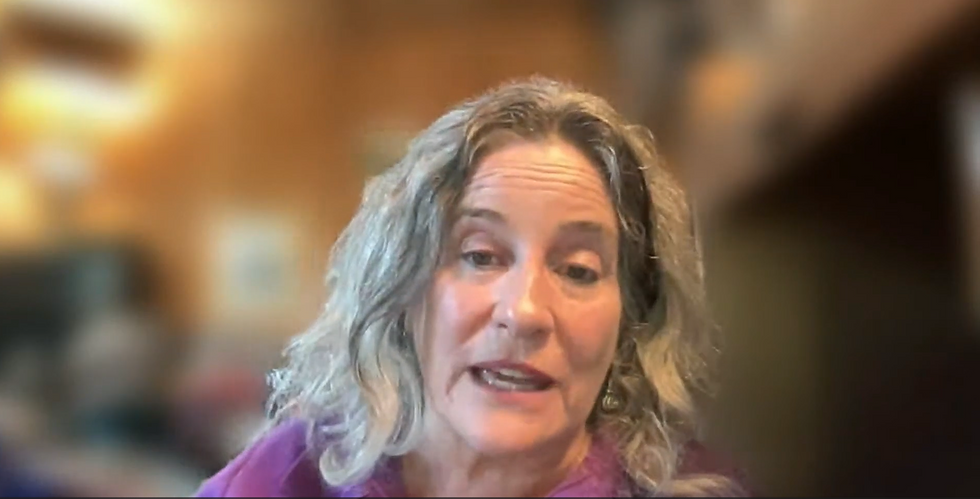
Amy Schefer: So, I was then trying to get a referral to somewhere else without pissing that guy off. Frankly, I'm just going to be blunt. And that was really navigationally difficult. We finally got referred to the Bay Area and were flying back and forth for surgeries to the Bay Area. And that surgeon said, "Oh, I operated on this on a six-month-old." By then, my my kiddo was two, but that guy made an error. And then we were really up a creek. Um, and so we had to fly on an emergency basis and uh, so finally, so that was team three. Finally we got ourselves to the team that Lazer is with now and the this was so mo motivating for me.
I know I'm taking a long time to answer the question how it impacted me. But if I had only known sooner what I know now, our journey would have been way different. And I was um really fortunate to have uh, gotten to a really top-notch team, but I didn't want anybody to go through that again. And then later, we uh, were on the Discovery Channel and began to meet other people and see that we were so way better off than other people it with our similar diagnosis.
Um why? Because I had some attitude and I was like no this isn't good enough. I'm going to get another opinion. Oops. I better be diplomatic. But some people don't even ask for a second opinion. And um, so I began to see really extreme differences in outcomes, which broke my heart, and I would never want to have that. And um for anybody facing the kind of medical difficulty, because we're like when you get in the trenches with that kind of thing, it's like we're all a tribe. And so I wanted to reach my hand back.
And um not coincidentally, the whole time that Lazer was going through this um people, even medical professionals were referring people to me because they were like, "Oh, she's she can tell them both ideas, but also she can tell them stuff we can't tell them." So I started working naturally as a bridge for the two sides. There's a lot of things that parents know about, caregivers know about, people who have been there know about that either doctors either don't know about because they haven't lived it, or they're not allowed, they they're constrained by laws that make them crazy sometimes and it's very frustrating for them. So if if if we can work as a team and bushwack together um then results can be better. So that is my very long answer.
Alysia Thomas: Good answer.
Becky Miller: No, that's wonderful. I I absolutely agree with that 100%. That is a very powerful story and I think we talk about advocacy a lot here and a lot of it started because all three of us have had at some point and even I would say sometimes we even even have had it recently because you can feel like I know how to advocate now but when you have both Alysia and I have recently had things that have popped up with our help that it's like oh I thought I was done like advocating hardcore for myself but now I've got this new thing and I have to start all over again, you know, like and and just like you said, it's happened to us enough that we...
Amy Schefer: Right.
Becky Miller: ...wouldn't ever, ever want that to happen any to anyone else. And so I I think that's wonderful that that has shaped the work that you're doing.
Amy Schefer: The other thing that I, I notice about it is um every family has a different arc through care. My kiddo was born with mechanical differences that could be surgically repaired to the best of medicine's ability. Um, and the ability of medicine changes over time. So that's another reason to get with a center of excellence or a top-notch team, because they have their eye on the prize that what is the standard of care now and now and now and now. And so planning that out the best you can and sometimes postponing interventions is important. But in my case um, we are now at the pinnacle.
My kiddo is 21. All further surgeries in life will be outpatient. The emergency is over and I have an opportunity to um, put all of my attention and energy into Advocate Angel and to helping people navigate. This is um, uncommon. I mean, some people have situations that limit what they can do progressively. throughout their life. Some of them get better and worse. And so, um, the. .. it was hard for me to, uh, turn around and, uh, write a chapter. I recently wrote a chapter, uh, that's, uh, going to be released here in a book called [Turning] Pain [into Her] Power. And it is uh, my chapter is called from "Her First Breath to My True Voice. And um, what I want to say is it also takes grit to just turn around and look at at where you've been. I charged through 21 years and I went right past a lot of doorways, because I had a practical problem to solve and wallowing around or or even noticing certain things. It's just not the time.

Amy Schefer: So then there are also times in life where you sort of take a step back and look and go, "Oh my goodness." And that's where um, podcasts like this and community and um having a capacity to connect with anybody who can understand what you're talking about. It makes all the difference.
Alysia Thomas: So on your website, Advocate Angel, you focus on helping families navigate complex medical systems. And I think that's something that can feel overwhelming to even those of us that are struggling with common conditions.
Amy Schefer: Right. Right.
Alysia Thomas: Um, but what would you say are the biggest barriers that families are facing and how do you kind of help them overcome those?
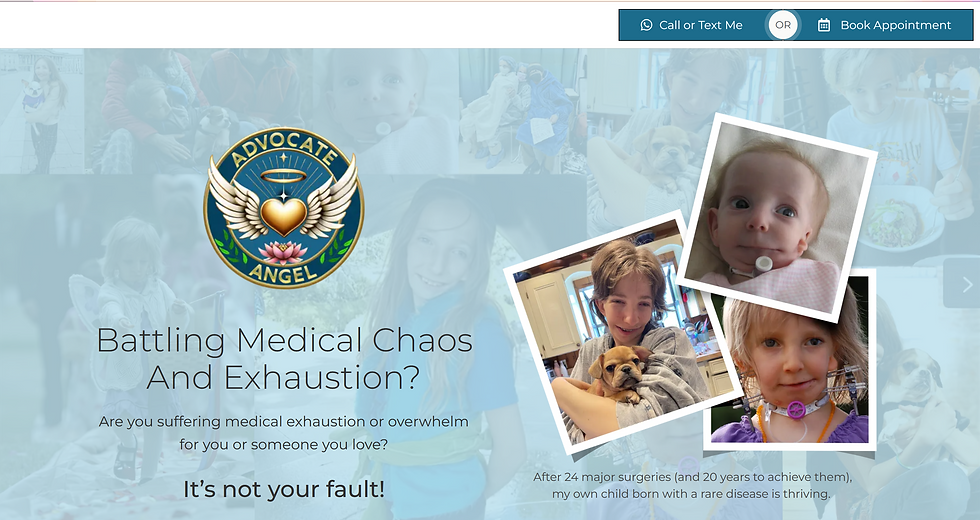
Amy Schefer: Well, um, this is something that I broke down into four categories actually, um, and turned into a scorecard. And I'm, I'm just now learning how to do scorecards. You might have experienced them online there. Some of them are like, "What kind of dry eye do you have?" or, "Are you a green pill person or a blue pill person?" And there's there's all kinds of frivolous um, frivolous to serious kinds of scorecards out there these days, but I made a scorecard called uh, the ABCs of navigating the Medical Maze. And um, it's 15 questions in four categories. And to me there's, there. .. I'm, I'm going to back out in a minute and say another aspect of the whole thing. But specifically there's four really uh, key categories where if you can uplevel your skill you can get better outcomes.
The first one is advocacy. It's um very that is a very broad to a very specific umbrella. The broadest that I do that I've participated in is legislative advocacy for bills that um disallow certain insurance things, make enforce other insurance things, um, put uh, rare disease uh testing to the front of the line, different things like that. And that kind of advocacy means um learning about bills that um, your family experience could illuminate to a Congress member and then speaking to them.
So I've done that kind of advocacy because the statistics show that it's really the people who go to their people and sit down and say, "House Bill 6437 addresses this and let me tell you the impact that this would have had on my family." That is very effective. But there's also caregiver and patient advocacy with your care team. There's many kinds of things. Um, I can drill down into any of these categories, so I'll attempt to not over talk, but a lot of families don't know that there are centers of excellence for certain diagnosis and that not every care team is built the same, and you will have different results, I guarantee you with the right team versus the wrong team.
So, people don't know that you can um, look at a surgeon's track record. You can look at their batting average. You can look at a team. Uh. one team in the cranial facial world where it uh where I was born. That team did the same number of surgeries in 30 years as my daughter's current team does in one year. What surgeon would you rather have since this is a one-and-done surgery? Right?

Amy Schefer: So, learning how to um what's available uh, and how to get to it and how to get it paid for. That's advocacy. Um, and also just going in with your list of questions and knowing that you can say, "Well, I appreciate that you're proposing this course of action, but I'm proposing this one." That um, just knowing that your you have a PhD in your own experience or your child's experience, you have um real road you've got rubber to the road experience like, "oh you're saying that my child is going to sit for 49 minutes three times a day. I got something to tell you my ch ... maybe that child over...," right? So knowing that it it is your place to shape the treatment plan and say this is going to be possible, this isn't. What are we going to do? Um that's advocacy.
That's a B is backing and that's like the structural backing. What kind of you know what kind of charity care is available at your hospital? What kind of uh, skill do you have in uh, challenging denials? Do you know how to set yourself up ahead of time to increase the likelihood that the denial never happens? Do you know these are this this is backing it's like the structural kind of backing.
And C is community and collaborative health care team is crucial. You know that there are families who have been through something like this, not exactly the same thing. And you have to take just like you have to take your care team's stuff with a grain of salt, you have to take anybody you're asking on the internet. You know, you don't know that you haven't...I've had people ask me things and it's like, I have never met your kid. I haven't seen their cranium. I cannot answer whether they should ha... like your surgeon obviously has and so you can't just go with like, No. Never get that surgery," right? And people are dispensing advice that's like no ... you can't tell somebody that, But on the other hand, surgeons they haven't lived through that. Surgeons have told me, "Wow - I, we feel like we're in an ivory tower. We do the one thing that we do, and we don't really know when we say ... we can say about this surgery, but we're not weighing you know in in our family's case that how many dozens of surgeries is this what is the collective impact of dozens of surgeries what is the collective impact of dozens of anesthesia what is...?" The, you know, they, they don't have that they just have you know a very narrow band so...
Um, community is crucial and there are um events where people just show up together in the same space or there are group chats even on Tik Tok. There are lives you can join and people just jump on and go, "this is the thing that is pumping the edema in my legs," and somebody else with that circumstance says, "oh, is that the Johnson 283?" or the, you know whatever. And um, having that against the isolation that a person can feel is crucial. And then the other half of C is collaborative healthcare and I was talking about um there are ranked um, usually Centers of Excellence either ranked by a professional organization like the American Cleft-pallet and Craniofacial Association ranks - they don't rank, they vet - craniofacial teams and they're like, "these guys are good, these guys are good..." And how would you know that? You wouldn't know that right so different different associations uh rank or you can, you know, if your local hospital has something like that, it's going to be right up there like the heart, you know, known regionally for heart procedures or whatever.
And then last is diagnosis. Diagnosis is a huge one, and most people don't know that. Um gee, if they've gone back x and so many times and they're in the back eddie uh, over here that they're not getting the care they need and they need the diagnosis first. So, um I have a little scorecard, you answer these questions and then it talks about each of those categories and the relevance of each category and then it gives you feedback specifically on your score, like, "Oh this score was a little lower. Um, here are three things you can do." And um I'm casting that net super broadly um because I just think there are millions of people out there who just landed in the swimming pool and they don't know which way is up. Um and they don't even know where to start looking. And I think uh there needs to be a very broad net cast. Um, so.
Stacy Griffin: I agree that there are a lot of people on the deep end of the pool and they don't know how to handle it. So, I, I love what you're doing, Amy. I think it's going to help a lot of people. Um, let's shift gears a little bit and talk about genetic testing, because I think that with a lot of what we're dealing with, genetic testing is hugely beneficial for the people involved.

Amy Schefer: Mhm. Mhm.
Stacy Griffin: So, how do you think today's advances in genetic testing and early identification change the way we experience diagnosis? It makes us wonder how might our own journeys with autoimmune disease maybe have been a little bit different if we had known more in the beginning.
Amy Schefer: Right.
Stacy Griffin: So, from your vantage point, what breakthroughs excite you most in genetics right now?
Amy Schefer: Well, um, first of all, let me just say I'm a well-educated mom. Uh, I am not a diagnostician or a geneticist or anything like that but I have been reading the landscape for some time. So I will say certain things certain cautionary things um, and certain exciting things, On the cautionary end, um, I don't know if you guys followed the demise of 23-and-Me, but um the the commercial landscape of genetic testing is a little tricky. The reason is that once you, once you have been tested, that company can make no further money off of you. And 23-and-Me couldn't make enough money. So they had sloppy procedures and people's genetic ... like you can't get much more personal than genetic information, and their information went out to the world which is terrifying.
So, um I I am very much a fan of genetic testing and very much a fan of researching the organization. I, I can't really speak to um, which organization is the most trustworthy, but um, I would really research that. Well, There's um, there's even genetic testing available for um, the functional medicine end of things, and functional medicine is very, very helpful for some of the autoimmune things. And um, if you can get with a functional medicine person that can look at, well your DNA even aside from the autoimmune diagnosis, "you um uh the reason you need constant stimulation is yes you're making dopamine but your body is burning it off instantly. So some things to do about that are this," and anything you can do for the general health and well-being of a person whose body is carrying the extra demands of any kind of chronic illness, um, any insight that you have can be very helpful.
Um, there is one company that I've heard is highly reputable in that space and that's the DNA Company and it's because they double blind, like they don't even keep your, the scientists never see your address, your name or anything, and that's really what you want. And then they destroy the sample as soon as they've tested it. That's what you want. So, you need a level of rigor. So, um that's my cautionary information.
But the other thing is exactly what you were we were chatting ahead of this uh uh session and the fact that um, you could just order up. getting your genetic information that the hospital system couldn't just easily order up is powerful and is certainly available to families in a way I really don't know if many families are aware of that.
It's useful to have somebody trained to unpack really complex results and I would say you know this this is such a complex field. So, um I recently heard a podcast with uh, an interview between a company called Gene DX that is doing all kinds of great work in the in the space, and they were talking about um a new recommendation that any kid with certain developmental delays be genetically tested. and they think that's going to go, it's going to spread wide spread through the medical system, which is important and the genetic counselor and geneticist with the PhD, they were talking to Sid, it's really important for somebody with a lot of training to unpack what the family wants first.

Amy Schefer: Um, those aren't the kind of results you would want to just go order and then not be able to interpret because some things you don't really want to know. Some families don't want to know. Um well, if this is passed down genetically, does the next generation want to know if they have it or not? Sometimes the answer is no. And it's not in anybody like who am I to say what choice you make. So this it's a very complicated um field with a lot of new um, exciting ability for um genetic testing to occur to give you answers. And it's still in the same framework where um - I'm going to step aside from the point for just one moment and say this is one of the areas that I um spoke to legislators about because did you know that genetic counselors make nothing? They make nothing. It is an outrage what genetic counselors make.
Alysia Thomas: It's criminal. Oh,
Amy Schefer: It's criminal. And therefore, there are not enough genetic counselors. And therefore, if you have a condition that may need interpretation or where you'd be better off having somebody with training talk to you, you it's unconscionable, because you have to wait far too long for your results. you are put in a situation of just going and getting results, mail-in results. So, you have your answer and that person, you know, we, I'm part of the Northwest Rare Disease Coalition. They have done work with the genetic counselor training program at University of Washington. Well, these people go through this whole training. They've got student loans. There are no further...it It's sort of like ...
Becky Miller: We did a, uh, we were curious about it, and we did a workup of how much schooling does a geneticist, not just a genetic counselor, but an actual geneticist need versus and most of them have as much schooling ...
Amy Schefer: Right.
Becky Miller: ... as like a surgeon does, but they get paid less than a third of what a surgeon does.
Alysia Thomas: And so so so hard to find one.
Becky Miller: They should be getting paid a whole lot more.
Alysia Thomas: So hard and, and bring understandably would you want to go into that field if you get paid crap and...
Stacy Griffin: What these people are doing is so vitally important that their pace should be commiserate to what they're accomplishing for people.
Amy Schefer: Exactly. Exactly.
Stacy Griffin: And it's not. And it's not.
Amy Schefer: Yep. So this is where Yep. Yep. actually and this is where organizations like the Every Life Foundation, they have a whole system where they um, get advocates and they say, "These are the three or four bills we're focusing on now, but you're welcome to do this." And they have, there's a national thing called Rare Across America. A lot of rare disease um organizations do it. And with Rare across America, they sit down. They're like, "This is how you talk to a legislator. Let's practice. Okay, how was that? Feedback. Feedback." This group is going, "Here's your legislator. When can you sign up?" And they they people go through, and they tell, and then they tell each other the stories and they pick the top three stories and people show up in their legislators offices and they say the story that um, you were telling me for example, right? That how how long did you have to wait like because we did this for a bill that brought to light because legislators are looking at so many bills every, every week it's ridiculous. But when they hear, "this is House Bill number X, and so and here's how it impacted me," then they go, "oh got it." And they are much more likely to either sign on to co-sponsor that legislation, certainly to vote for it.
And this is a a lot of how constituents really make an impact on how bills uh, get passed. So now that you're all fired up, I'm gonna corral you over.
Alysia Thomas: That's a yes. Well, that's perfect because our next question is just about that. So, you have mentioned taking your advocacy to Washington DC and working alongside other rare disease families.
Amy Schefer: Yeah. Right.
Alysia Thomas: Can you tell us a little bit what that experience was like and what its impact on you was?

Amy Schefer: Right. Oh my goodness. Well, um I went with a a really awesome organization called the Every Life Foundation. They do um uh one branch of what they do is called Rare Disease Legislative Advocacy, RDLA. And a lot of people, by the way, have multiple things going on. Some rare and some not rare. And it's not about quadrroning things off like um, a lot of rare disease people have chronic illnesses and other things going on.
So, um they had a mentorship. I signed up. Um I ,anted to work on improving my public speaking and getting out, which is and this is part of the result of that, right? So, um, they paired me up with this awesome woman that start started Northwest Rare Disease, um, uh, Coalition. She's a co-founder and also another, uh, organization called Born a Hero. She taught me the ropes and I went to a couple of the local events, and then they flew us all out to DC, and we were a - I don't even know - probably a thousand people, and they had a day full of events. I bald all day long because when you sit in a room and it hits you what people go through...
It's almost it's both intolerable and strengthening um, because you're there with a bunch of other people like meeting you three, a force of nature. And so you both increase your strength and you're kind of decimated. And then the next day we went and talked about, you know, we had practice sessions for talking about things. We met with other people with similar conditions or other different conditions. There were videos. People have made, you know, outstanding um impactful videos about what they're going through. And then we went and met with legislators, and then we sat on the um front steps of the White House and I you know it just changed my life.
Um, and this brings me back to the point of community like even if I'm having a rough time, which I have, right? Um, I think to other people that I know and I, um, at one point felt like I was all by myself bushwhacking through the wilderness. Um, but in the act of reaching my hand back, I realized, oh, that person has been bushwhacking and they didn't have the benefit of this that I had the benefit of. And I never would have known that if I didn't connect with them. So um, it's uh it's not strong enough to say strength in numbers because it's not just numbers. It's strength in connection and it's strength in knowing somebody's story that you have with you even if that person isn't with you. Um and so you know how to approach a question with somebody else and help them see the way through.
And the other thing is um I started speaking I started doing public speaking in health care teams health care settings. Um I was part of uh craniofacial microsomia stud, and I got to know practitioners and they said until you worked with us we felt like we were cranking out research and not knowing if it ever hit the mark. So there is a real convergence of um, stake stakeholders in the sense of like caregivers and patients being invited to studies and um, there are a lot of weary practitioners, and um they feel like they're working in a silo and they also don't know the story. You know, they're blown away to hear what families are going through and it's important for them because they want to be relevant. They got into medicine to be relevant and they have so many strictctures around how long can they speak to you, what can they say, you know, you go for a surgery and there's so many things on the checklist that the person can barely look you in the eye and go, "Hey, who are you, and how are you?"

Amy Schefer: So um I work with medical institutions also and um there's one thing I was saying that the scorecard deals with the ABCD's. There's another thing there are two pillars to what I help people with. The other pillar is for everybody and that is learning um mastery of your nervous system, because we're all in fight or flight and that is the surgeons, the nurses, the doctors, the patients, the caregivers there. We're all trying to experience colossal things in tiny little containers. And our nervous system, I don't know if you know this, but fight or flight uh is supposed to be 4%. You're supposed to be your our system is designed to run from a tiger. Get us out of dodge, rest, and recuperate. And the other 96% of the time we're in a different part of our nervous system which is rest and repair.
And um, cortisol increases autoimmune problems like crazy. Repeated cortisol events and I know this from both being a teacher and from um the field that I work in. Repeated cortisol is referred to as ACEs. If you score X and so high on an inventory of ACEs, like were your was your dad in jail? Was your mom in jail? Did was there domestic abuse? Was there homelessness? Was there divorce? Certain things rank higher, certain things rank lower. And you take this inventory and depending on how you rank, they can predict autoimmune, chronic illness, severity of illness in later life. And there's also genetic things of course, but the stress and duress that you're under causes this, these genetic things to manifest predictably. I mean there's all kinds of studies. So it is very relevant. It's not just like oh calm down and smell vanilla and you know it's not it's not airy-fairy. It's practical, tactical, strategic to if you can get yourself into the best state you can be in before a medical appointment. Then you remember the question you wanted to ask. You take a deep breath when you need to and say, "Doctor, give me a little moment with that information. Hold, please."
You take a breath and you go, "Oh, I'm going to need to ask you this uncomfortable question. Can you stay five extra minutes? This is uh sorry, it's going to take more time," or whatever. You get into that boss state you need to be in. Not the um I got to get out of here, which is flight, or I'm going to punch this guy's lights out, which is fight. That's fight or flight. And people don't even identify they're in that state. And that state is not helping you. And it fogs your brain out on purpose because it its goal is to get you out of there or to overcome the um oppos, opponent, you know, this way. So I work with um everybody on that. I teach tips or tricks. I teach emotional, emotional regulation really comes from fight or flight. So it's managing your nervous system. So that you when you go repeatedly into appointments in your best state, it's like I, a trip to China, right? If you correct course one millimeter at the beginning, you end up in an entirely different location and that is how you can impact your your outcome.
Alysia Thomas: You are really speaking our language, girl.
Amy Schefer: Those two things.
Alysia Thomas: You are speaking our language. We are all nodding along for everything you're saying. We're like, "Oh my gosh, she gets it. This woman gets it.
Amy Schefer: Yeah. Yeah.
Alysia Thomas: I love it.
Amy Schefer: Yeah.
Stacy Griffin: Um, I, I love it. I love it so much. I have to pause for a minute here and just say thank you so much for coming and being here with us. And I say this because everything you just said is what I do. I, I am a nervous system regulator for teenagers and their parents.
Stacy Griffin: But the truth of the matter is that that regulation is so vital. It is so important to the well-being of kids, but it's important to everybody. Everyone has a nervous system and everyone has it go rogue sometimes and take off.
Amy Schefer: Right. And until until you're in the medical maelstrom, you don't actually know that other people in the medical maelstrom don't have that skill that teachers have, right? Like that's not commonly taught.
Alysia Thomas: Nope.
Stacy Griffin: No, because they don't have to cope with anyone as as long as a teacher sits in a classroom with these kids for a minimum of 60 minutes.
Amy Schefer: People People aren't aware.

Stacy Griffin: When's the last time you spent 60 minutes in a room with a doctor? It doesn't happen.
Alysia Thomas: Yeah.
Stacy Griffin: And then it's multiple days a week.
Amy Schefer: Right.
Stacy Griffin: So you these kids, you know them, and you know when their nervous system is flared, you know when they're struggling, you know when they're having a good day.
Amy Schefer: Right.
Stacy Griffin: ... all of those things just like a parent does. And sometimes my kids have told me more than a parent does because we spend more time with them.
Amy Schefer: Right. Right. And you actually know what the impact will be if that kid remains this far off course versus this far off course and you've got 20 x and so other kids that are in the same environment. They're ramping up in that energy. It it's very impactful. Your skill at um working with somebody in that situation is very impactful to the whole environment that everybody else is operating in.
Stacy Griffin: I think if doctors were taught the management skills the teachers have, it would go a long way, because my doctors that are good, and I do have a very good care team. I had to work hard to find them. But once I found them, what I saw in them was what I valued in myself personally and in my colleagues at work, which was they would listen to me, they would hear me, and then once they heard me,
Amy Schefer: Yeah.
Stacy Griffin: then they could give me quality feedback that was actually going to help me.
Amy Schefer: Right.
Stacy Griffin: And that's that's why advocacy is important is if you take that moment and you say, "Doc, I need you to give me five minutes because we have to talk about this. I need answers. I can't leave today without more than I have, because I need to be operational for my life and my family and the world that I have to go walk out into when we're done here." Those...
Amy Schefer: Right. Right.
Alysia Thomas: And you're and we're paying you. We're paying you to do this.
Amy Schefer: Right.
Alysia Thomas: You work for us.
Stacy Griffin: are exactly we we sometimes forget and this is something we talk about a lot that you do you pay your doctor and if your doctor is not doing their job then you should probably go get a different doctor. If someone came in and painted your front room and utterly destroyed it, you're not going to say, "Oh, I guess that's okay." You're gonna get someone who can fix it.
Amy Schefer: Right. Right.
Stacy Griffin: And we have to we have to give ourselves more care. Anyway, sorry. There's our rant.
Alysia Thomas: We could all just get on the same soap boxes together.
Amy Schefer: Yeah. Yeah.
Alysia Thomas: We could.
Becky Miller: So true.
Amy Schefer: I'm so glad you guys have each other. I mean, what an amazing resource you all are to each other.
Alysia Thomas: So true.
Stacy Griffin: It's really It's really beautiful.
Alysia Thomas: I know I would not have had my diagnosis had my sisters not encouraged me to go and ask for specific tests and you know put my foot down and go back and find a different doctor and they I...
Amy Schefer: Yeah. Amazing.
Alysia Thomas: ...mean who knows where I'd be if I hadn't had them telling me leading me along saying keep going try this try that you know very very blessed.
Amy Schefer: Right.
Becky Miller: Yeah. Every single one of us has found a diagnosis because of something one of the other of us said. Like I was, yeah...
Amy Schefer: Oh, there you go.
Becky Miller: I was tested for lupus when I started having symptoms because Stacy had seen some similar things and suggested it to me. I was the first one diagnosed with celiac. I suggested Stacy go in. Stacy suggested Alysiago in. So, yeah, it was just a it is a nice resource.
Amy Schefer: Amazing.
Alysia Thomas: Yep.
Stacy Griffin: Yeah, we're lucky.
Alysia Thomas: Okay. Getting back on track.
Stacy Griffin: So, as we wrap up today, can you let our listeners who are patients, caregivers, and advocates themselves know how they can get in contact with you.

Amy Schefer: Well, that's easy. Um, I have a website called advocateangel.com. You can get in contact with me there. And you also can get a link to the scorecard and if anybody feels led um take the scorecard uh and give me some commentary on the feedback you get and at the end of the scorecard you can schedule some time with me.
Um, one of the things that I found is that each person's situation, even if you have the same diagnosis, is very particular. Very particular. Um, even, you know, I don't know if you're aware, but the laws governing care in different states are different. Therefore, the care available for the same condition in different states is different. the the different diagnoses have different support groups. So, the the the best thing to do would be uh if they want to talk with me and get some particular pointers um, uh, and connecting points, do that.
But also look up your condition and see if there's a national organization. See if you can get in any chat groups and um, go with your gut. Also, some will be a fit and some won't be a fit. And just be aware you're going to be there's, there's kind of a, no matter what - I, I this I'm not saying this in a negative way but there's a hope factor and a disappointment factor with any team any group any um, support organization any support person that you meet, because the truth is it's a lonely journey. And that's part of what is very especially true of anybody going through um a chronic illness or complex or um rare disease. Um, and that is part of a strength and part of a loneliness.
So, um, do things in in enough moderation where you don't look at 20 groups at once and get overly frustrated. You know, be gentle on yourself and and try to connect with people. Um, my scorecard is intended to be helpful with um helping different people learn what steps might be the best next steps for them. And also, um, I know a lot about this nervous system regulation and I, I want to be doing more work there. But there's a lot of great um there are a lot of great people posting on Tik Tok, Instagram, um Facebook, YouTube. You can watch a lot of short little um videos. For example, Vagas nerve um is all over all of those right now. And there are a lot of very quick resetting um techniques. Like I don't know if you like I'll just share one for fun.
Did you know that you you cannot be anxious if you are using your peripheral vision? So if you are anxious, you can I just hold my fingers up and I, I look in my peripheral vision for 30 seconds and already I just naturally start taking deep breaths. And a lot of times if you can just reset yourself, if you can notice yourself ramping up, and you can slow your... my mom used to say, "Hold your horses." If you can hold your horses then you're like, oh. And in one of my talks, I had a video of a cat that fell in a swimming pool. And the cat's like, and then it looks over and it goes, "Oh." And then it gets out of the pool. So if you can just give yourself even 30 seconds reset, you can notice things that you didn't notice. And a lot of times the little steps that you take, which in nervous polyvagal theory is called glimmers, you know, we we all the the people that get training get trained on how traumas stack. Well, those little tiny aha moments, they're called glimmers. They're actually have a name in in your nervous system, and you can stack those on purpose.

Amy Schefer: So, if you can just catch yourself flipping out. And if you can give yourself little glimmers, it's sort of like Hansel and Gretel. You can string those through the forest and find your way out. And so, um, that's what I would advise advise people. Also, see if you can start just getting curious. Let yourself get curious. It's not like I'm going to go make myself, you know, it's part of this sort of curiosity and oh that does feel a little better. And then it, you know, once a day write down the three top things that were awesome and those things start connecting and those will make an impact over time.
Stacy Griffin: I love that you talk about curiosity because that is one of my tenants with my students is that you have to be curious about why you're feeling the way you are, why you are thinking the way you are, and not get angry with yourself. You can feel emotions, but you don't need to let them overcome you. Instead, get curious.
Amy Schefer: Right.
Stacy Griffin: And it's miraculous what you can learn about yourself and also how you can take yourself out of that fight or flight. If you put yourself into a place of curiosity, it works wonderfully.
Amy Schefer: Right.
Becky Miller: Yeah. And that was a great little exercise for that, by the way.
Amy Schefer: Oh, thank you.Becky Miller: So,Amy Schefer: I'm full of those.Alysia Thomas: I would use that.Amy Schefer: If you ever see me, I made Tik Toks about, you know, you can walk backwards. There's there's so many really fun things that um are substantial, like you feel better after 30 seconds of that.Becky Miller: That's good stuff to know.Amy Schefer: Yeah.Becky Miller: We will make sure everybody gets the links to that um, everything on your website as well as your upcoming book and we'll have all those ways to connect with you in the show notes.
Amy Schefer: Yeah.
Becky Miller: Thank you so much for being with us today, Amy, and for the wonderful, beautiful reminder that advocacy starts with one voice, one story, one brave step. Um we appreciate it. And to all our autoimmune adventurers out there, thank you for joining us. We always love to hear from you. Leave us comments, like and subscribe, and let us know what other subjects that you would like us to cover.
Until next time, remember that you are worthy of joy and your disease does not define your life. You do.
HELPFUL LINKS:
Amy's website: https://www.advocateangel.com/
Amy Schefer co-author of Turning Pain into Her Power: https://amzn.to/4ngnvT8
*The Amazon link above is an affiliate link. Using this link will not cost you anything extra, but as an Amazon Associate, we earn from qualifying purchases.


Comments