68 - How to Love the Skin You're In: Vitiligo, Self Love and Blue Zone Wisdom with Veronique Ory

Alysia Thomas: Welcome back to Autoimmune Adventures. This is the podcast where we talk honestly about what it means to live in bodies that don't always behave the way we want them to, but still deserve care, compassion, and respect. Today's conversation is one I've personally been looking forward to. Uh, our guest is Veronique Ori. Veronique is a yoga teacher, intuitive movement guide, a global traveler who whose work centers on helping people living with chronic illness, autoimmune disease, and nervous system dysregulation to reconnect with their bodies without punishment, perfection, or pressure.
Veronique brings a deeply grounded, humane approach to healing. She talks openly about grief, identity shifts, nervous system regulation, intuitive nourishment, and what it means to slow down when life doesn't give you permission to stop. She's also traveled the blue zones around the world, learning firsthand how community, movement, and nourishment contribute to longevity and sustainability. We are so grateful to have you here today, Veronique. Welcome to Autoimmune Adventures.
Veronique Ory: Thank you so much. I'm really honored to be here.
Stacy Griffin: So our first question today is this. You've said that your body sometimes whispers and sometimes screams and that really stuck with me. So what did it take to learn the difference for you?
Veronique Ory: A client of mine reminded me of an old story. You've probably heard this. the the gentleman who's, I picture it like a veranda kind of like southern style home and his hound dog periodically would just howl and the neighbor comes over like you know what's going on like is the dog in pain and and the man said yeah he's he's lying on a nail and the neighbor says well why doesn't he get up and he's like well it doesn't hurt that bad and and I think like that, like, like drops into my core cuz there's there's always these like kind of like sneaky like tap, tap, tap things. And the more sensitive that we become, if we're empathic a little bit, if we're in the body, right, like embodied, right, where we're in the breath and we understand how like our mind can tell the finger to move in a certain way and it does.

Veronique Ory: the more we get adept at the mind body connection it's like you can't unknow that connection and so in the slowing down that starts to get highlighted, right, So I talk often times about when I lived in New York City when I was running my own nonprofit theater company and I was in the hustle and I was I was even reflecting on my walk this morning with my dog like wow like there was just like so much passive movement where you're literally in a kind of marathon of your life up and down the subway stairs like trapesing from here to there, and then you're like this like human sponge like picking up on all of these like frenetic energies of everyone's like in the in the hurried-ness. And so when you're in the marathon of your life, you can't possibly have the ability to simultaneously take in anything that is in opposition of that until it like literally, well probably not literally, but maybe sometimes literally, figuratively grabs you by the shoulders and says like you need to stop. And in fact like if you continue on in this pace like you will kill yourself, right? Like the the adrenal fatigue is real, like the extreme exhaustion is real, the depression is real, all of that mind and body connection that is very separate in the western health care system.
I think the autoimmune rise is really allowing for this big spotlight to be shown upon. Oh, actually, if we can all agree and science has backed this, right? How like the thoughts turn into our words and the words turn into our actions and that becomes our reality as we're walking through this life. And so as you're moving through and and maybe some of you listening to this are are thinking, okay, I can I can know it. So I think of like these layers deeper of the knowing. So I think of like a cognitive knowing of like I hear something. So, for example, you get the diagnosis that you have whatever autoimmune disease that you have, right? And so, like here we are in the head. Oh, there's something wrong. I got to like fix it, right? Like for a lot of us listening, like we're in like a very like fixer kind of mentality.
And and then there's like this like layer deeper where where I, I, I really liken it as like a heart knowing of like, okay, like what does this mean? because I trust that our bodies are intelligent, that they're wanting to protect us. They're actually wired for survival and there's nothing broken about us, right? Like just the word "disease" has actually a connotation that's really not apt for what's going on. There's something in the system that is trying to protect it, it's interpreting something as a foreign body. And so I think of it more of like "a misfire." So I don't know like what in medicine that would be called but we've like agreed on autoimmune disease. Okay fine. So, we're moving through this, right? And then like this next layer deeper, which I call like a cellular knowing where it's like like the whole body like knows heart, mind, spirit of like there's there's something that's like not just tap, tap, tap that whisper, but now it's like, oh, like there's there's an initiation that's being beckoned of us, right?

Veronique Ory: And it's like, why am I going to let anything disrupt my ability to live with vitality, to feel joyful, to feel like I'm inspired and creative and energetic, all of those things, like that is our gift of getting to live in this body for this go around. And so I think of it as like, okay, like let me lean into this as a teacher. So oftentimes with these different autoimmune diseases, it's like, okay, well, at the surface, I know that this is the teacher of letting go of the things that are out of my control, right? like I can eliminate gluten, I can eliminate alcohol, I can do the protocols, I can do all of these things and yet I still have white spots on my skin. I can put all the ointments on. I can go to laser therapy. I can go to phototherapy. I can go to the dermatologist every year and yet I still have white spots on my skin. Right? So like it's so frustrating because we've been conditioned like oh, like we're presented with a disease and so now it's like okay now I'm holding on to there's like something inside that's not in harmony with how it "should be," loose quotes, right? But it's like okay how is it affecting my life in its totality like is it robbing me of my joy is it creating like emotional distress. Is it making me feel depleted, depressed, rageful? Yes. Like that's come through so many times, different waves. Like I processed, oh, guess what? It's not a linear journey. Like here we are in a rage again, you know? And so like what can I have control over?
I stopped going to the dermatologist. That's my personal choice, because why am I going to go every year for the guy to tell me that there's no cure? Because guess what? It's not a skin issue. It's an internal issue. And like we've been approaching these things incorrectly by trying to correct these things topically. Oh yeah, I see this symptom over here, right? It's like that same idea like you walk into your kitchen and and there's like water all over the floor. Like do you go and grab the mop or do you like go and turn the faucet off? Like most of us are like...
Alysia Thomas: Yep.
Veronique Ory: "Oh my god, I just got to like mop it up." And it's like, hold on a second. Like, get to the root of what's going on. And...

Alysia Thomas: Don't you think that's really what it comes down to with autoimmune disease though? Like any, every autoimmune disease when you go because we've tal, we talk about this a lot on our podcast.
Veronique Ory: Mhm.
Alysia Thomas: There are and it's necessary that we have all these different specialists but they're not treating the body as a whole. They're treating one system, one part and what's going on, as you said, is internal. It is so much more than your skin. It is so much more than your gastrointestinal tract. I mean, it is our whole body. But western medicine really does not take the approach that is the most helpful for autoimmune disease. It's, it's just it's frustrating.
Veronique Ory: Mhm.
Alysia Thomas: It's frustrating, but that is that's that's why we have this podcast. That's why we're bringing people like you on.
Becky Miller: Exactly.
Veronique Ory: Yeah.
Alysia Thomas: That's why because we we would like to inspire change because what's being done isn't really working.
Becky Miller: Yeah.
Veronique Ory: Mhm.
Becky Miller: Well, and one of the things when you were talking about kind of the hustle and how our body almost gets into that hustle mode with everybody, and we don't realize just how detrimental that can be to our nervous system. Um, I guess my question would be, so if life doesn't slow down with you, because I, you know, we all know life's just going to keep rolling along and sometimes we can't put the brakes on. What have you found personally? How does slowing down look for you in your real life? Like even when everything's crazy around you?
Veronique Ory: I play with this so much. It's actually one of my favorite things to invite people into. So one of the things that I personally have done and I know it's not possible - so for example, if you're like an on call doctor or nurse, if you have, you know, young kids or an aging parent where you feel like you need to be on call, like you need to have your phone by you. Um but I think that there is a very strong shift that's happened over these last, well part of it is technology, but I think part of of the rise of autoimmune disease also too just to bring it back a little bit is that "faster is better" that "convenience is better" and how the food system has failed us. how the travel system has failed us, right? There's like so much inflammation in like here, let's give people bread, let's give them bagels and cereal and processed foods. And so it's like coming from that then we had this huge technology spike and it's only getting faster. It's only getting more integrated with the rise of AI and everything and, and and not to be against the rise of technology at all. I mean, like I just love that we're all in different places and we get to have this conversation together. How fabulous, right? But how do we shift from the technology being a space to disconnect, but rather lean into the reason that it was invented to actually connect?

Veronique Ory: But I believe that rather than diving into screen connection right when you open your eyes, which that has been like very ingrained. I know like a lot of my friends, a lot of my colleagues, a lot of my clients, there's like a desire to like, oh, let me just have my phone by my side like just in case of an emergency, right? And then it's like, okay, well, I use it as my alarm. So then I'm just going to like pick it up and I'm going to turn my alarm off and then let me just go ahead and like check my email and let me check my messages and let me check my Facebook, let me check my my Instagram, let me check my WhatsApp and like you just kind of like like scroll through all the things, and then all of a sudden it's been an hour or maybe more. Maybe you check like your different news outlets and like you could be in bed for hours just like doing this thing. Meanwhile, like your cortisol is like spiked through the roof, you're like stressed beyond measure, but you don't even realize it because that has become the norm.
So, I don't know if this resonates for anyone here or anyone listening, but I really, really recommend, and I've actually only been doing this really really since the last four years where I plug my phone in on the other side of my home, like as far as my head as it could possibly be. It's on airplane mode and I try. I'm not perfect, but I try from 7:30 p.m. to 7:30 a.m. Like, it's like a no screen zone. And, and I think the protection of that is for nervous system regulation. It's allowing for there to be a pause because there's so much false urgencies that we kind of like, like get into these like knee-jerk reactions or like, "Oh, I got to just...," you know, it's like like almost none of it is a real emergency. Like I I mean, I pray that it it isn't a real emergency, but we act as if it is.
I really invite to like resource yourself before you engage with others. Full stop. And so, that's different for every person. For me personally, I love a nice tending to my face, my skin. I do some dry brushing, some gua sha-ing, you know, I brush my teeth, and I get like a glass of water with some lime, and then I um I do still drink coffee. We It's a little bit of a debate in the autoimmune world, but I, I just love it. So, I do my coffee and then I, I orient to take my dog for a walk, which I leave my phone at home for, which is like kind of a revolution these days because I don't want to have like the moment on my walk where I'm like, "Oh, like what time is that appointment? Let me just look real quick." And then all of a sudden, I'm like scrolling to other things. And then meanwhile, like I've missed the whole thing, right? Like this morning as the sun is rising, I hear this owl and I'm like, "Oh, heart." Like, "Let's stop for a minute." And then we're just like like there's this owl and like he's still up like how wonderful.
And then you know like you get to be in awe which like you don't get the space of awe when you're like like with your focus like so narrow. So those are a few things just to like, but I think first thing in the morning when you're like clear is the best time to invite that because then you're resourced then the triggers can happen and you're not like so spicy so to speak. The hope, right, is that you can like let things roll off like a little bit more gracefully. And then, and then like creating like secret pauses. Like I love like oh like I have 15 minutes between clients. Like I could like pour into my email or I could walk out into my backyard and just like feel my feet on the ground. And both are productive in different ways, right? Like is the weight of like unread messages louder than like connecting with nature? Sometimes. So sometimes I'll do that and sometimes I'll do the other. But I think like if you have that space in the morning then you're more resource to navigate how you want to intentionally slow time down and then the in between.

Alysia Thomas: You have to be really conscious of it. You have to be very conscious of what you're doing or not doing.
Veronique Ory: Yes.
Stacy Griffin: Um I know that you work with people who experience a lot of overwhelm. So how do you help them regulate their nervous system without it becoming just another thing that they feel they have to do perfectly? Because that you know that perfection struggle is very real for people.
Veronique Ory: Yeah. Um, it's probably no mistake that I attract a lot of type A like get after it like like attracts like. Um, I love a good to-do list. I, I'm constantly like just tell me what to do and I'll do it, you know? Like I've definitely been on different protocols where it's like herbs or, you know, nourishment or movement or whatever the things are. And so often times it's so interesting like the the the brain is like, okay, what can I do? And so I come in with with the prompt of like, "what can you not do?" Right? So like instead of like taking the thing for the inflammation, it's like well what are you doing? Like what are you taking in that's inflammatory? Oh, well like I just, you know, like I just have like a little piece of toast in the morning and then I just have like a little bit of, you know, cocktail at night or like like, you know, and like no judgment, right? Like we all are like putting the things in our body in the way that we've habitually done, but it's like in this moment, is this fostering a sense of light and bright? Is this encouraging my ability to feel more embodied? And by embodied, I mean like do I feel like most uplifted, most able to move, right?
That I'm not inhibited by anything like physically, mentally, emotionally. And so there's there's oftentimes a conversation at the beginning of sessions where I think like maybe people particularly in the west like we see images on Instagram or on magazine covers. I mean, we don't see magazines very much anymore, but we might see just images in general of like, oh, yoga is, you know, like very fit women who are like putting their bodies in like pretzel shapes and it that's not I mean like I suppose like that could be yoga if that makes you feel uplifted, if that makes you feel vibrant and bright, right? Like I definitely love, you know, like a very like because I happen to have a lot of hypermobility, like I love expressive back bends. Like I love to move my body. That's part of it, but it's only one of the eight limbs of the entire yoga practice.

Veronique Ory: And so when people understand that, it's like, okay, like if I'm coming, you know, to me or if a client is coming to me and they're saying, "I have hip pain," like I'm actually like not as focused with the pain as I'm focused on the emotion that is definitely living in the hip, right? So like grief lives in the hips which is why like if you're in a hip stretch, like, it's very common that you might start crying uncontrollably. Um if you're feeling pain in in the joints often times that's like, like you're like gripping like you're like trying to like hold on to something that once was.
And so when we understand like understand the energetics of like where the pain comes from then we can actually and some people are like I just want to like focus on the physical stuff and that's fine like we can definitely do that also but I think like the more that we like start to practice together they realize like okay like I could be surface level, or I could also go layers deeper because if someone's like, oh, I just want to like stand on my head or like I just want to, you know, be stronger. I want to work on my balance. It's like that's part of it.
And what you realize is like the balance that you find physically, it will never feel balanced if you have like all of these like thoughts swirling around. Like if you're so distracted and in this like sort of like tornado of emotional life, you'll never be able to stand on one foot. It's just not possible. Like your internal world is like short-circuiting. So it makes sense that we would have a conversation to kind of like clear the etch-a-sketch of everything that's been going on so that we can actually find the earth, find the breath. But I think if you stay long enough, you realize like, oh, like the journey of the shapes that we move through, it's a portal.
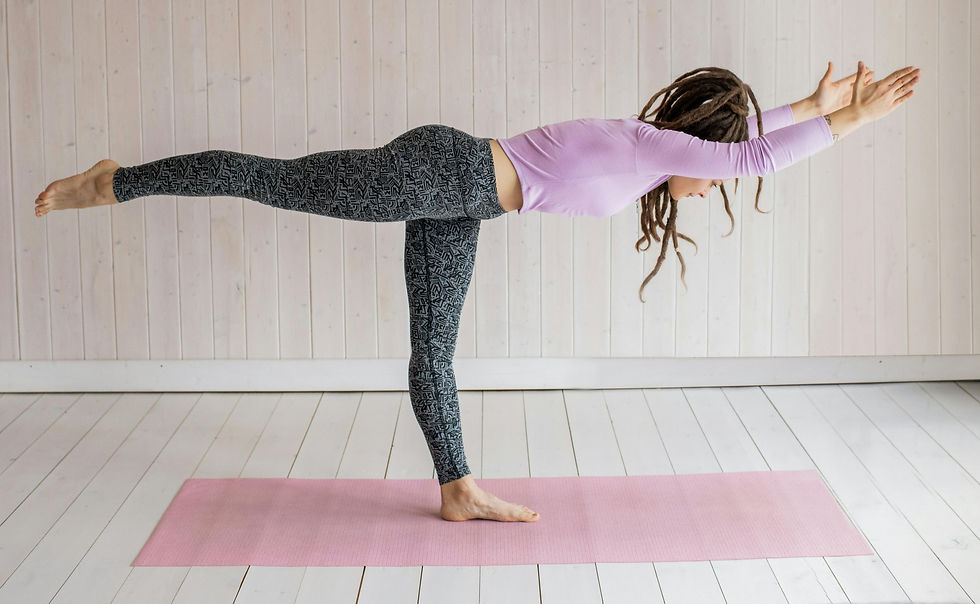
Veronique Ory: And like the thought that I'm having when I'm feeling like I can't hold this chair pose for another moment longer is the same as I can't have this argument with my partner another moment longer. I can't like be in disagreement with, you know, my coworker another moment longer. We start to like establish a resilience for challenge in the shape, so that when we come off of the mat, we're we have more fortitude to move through life. So, it's one of it's actually one of the most beautiful practices where we like actually stress ourselves on purpose so that we can practice like how do we come back to the breath after we've taxed ourselves so much because there's like a misconception especially like I think in autoimmune right they're like oh just don't be stressed just like stop doing that.
Alysia Thomas: Like it's so easy. It's so easy.
Veronique Ory: Yeah.
Alysia Thomas: Just stop. Just don't do just don't feel that.
Veronique Ory: Yeah.
Alysia Thomas: Just don't feel that feeling you're feeling.
Veronique Ory: It's like actually we're meant to experience all the emotions, but how are we channeling them in a way that's actually hazardous or helpful, right? Like if I have rage in my body and I'm like in the script of like, oh, like I shouldn't be angry, then I'm just like storing it up. And guess what? Like it's going to explode in a very inopportune time. And it has, you know, like I've definitely had moments that I'm not proud of.
Alysia Thomas: Yeah.
Veronique Ory: But if I have a space, you know, to like let it metabolize, right? So like one of my favorite things is like I get in my car, I turn the volume up as loud as it can because I just like I just want like whatever's happening in my brain to have another feedback. So I'm like, let me just actually change the radio station from the outside in. So like what's the vibe?
So I have like playlists for like different moods, which is actually like really powerful cuz sometimes like you want to lean into the depression sometimes like you want space to sob, you want space to rage, right?

Alysia Thomas: Right. Yeah. Because it's important to feel your feelings.
Veronique Ory: That it's just right that it's just not directed at the person that you love...
Alysia Thomas: Yes.
Veronique Ory: ...hopefully. Yeah. Or anyone.,,
Alysia Thomas: Yes.
Veronique Ory: ...in general. Yeah.
Alysia Thomas: Yes.
Veronique Ory: So, so yeah. So, it's like it...
Alysia Thomas: But it's kind it's a practice, right? Like you have to keep coming back to it to practice it and it's, it's, it's a very spiritual process I feel like as well, and it's different for everybody. Um I I'm going to shift gears for just a second.
Veronique Ory: Mhm.
Alysia Thomas: Um because we're really interested in hearing about the blue zones.
Veronique Ory: Mhm.
Alysia Thomas: Um and I think that in the blue zones those practices are just a little bit more normalized maybe or more ingrained into their society. Um, can you tell us a little bit about when you were traveling into the blue zones? Um, what did that teach you like about longevity and...
Veronique Ory: Mhm.
Alysia Thomas: ...nourishment?

Veronique Ory: So, there's there's five blue zones that have been identified. Um, and you know, if you're curious, there's definitely a lot to read up on them, but the places are Lomo Linda, California, Okinawa, Japan, Sardinia, Italy, Icaria, Greece, and the Wanacosta area in Costa Rica. And I had been to Costa Rica numerous times. I was in Sardinia for the first time and had this thought like what would it feel like to visit all of these places and I just kind of thought like ever you know like maybe like I would kind of like over the years like add another one and then and then as I sat with it I thought wow like what would it feel like to like experience them all within one year and I was like oh all five in 2025 that has a nice ring to it let me just like go for it, and I've been on this very almost like rebellious space of travel.
Um, I, I, I always like had it in my mind. I don't know if anyone resonates with this. I feel like this is kind of like a North American thing of like, oh, like, "I save up and I go on one vacation a year and like it's usually to see family," and um and so I've been like over these last two years I've been like what if I just went somewhere new once a month and I like kind of like embraced it like a challenge like a to-do list item but also to like get uncomfortable on purpose because I think that's where like the growth edges are like how much of a revolution is it to like look about your space and be like I'm choosing these items to put in a bag and then I'm going to like go somewhere else with these set items. It's like kind of crazy. So anyway, fast forward to I'm like having this beautiful morning on this pool deck in this gorgeous place in Sardinia and have this idea like yeah I'll just travel to all five in 2025 and I had spent the first two months well really like December 14th to February 9th of like 24 to 25 in Bali and I was kind of like on this one-way ticket like maybe I just won't come home.
I had put my house on the market. I was like in this like searching era of like where does where does home want to be? I was like really craving conscious community and and really wanting to be with people and in the place of of people who not only understand longevity and wellness practices, but they live it. Like let's stop talking about the thing and like actually live it, right? And so that was like part of like what I was kind of like moving through of I don't want to just talk about longevity. Like I want to live it, right? So, these are the zones that people live the longest. Um, this is where there's like the most amount of centinarians per capita. So, it's said that, you know, and it's like very different climates, right? It's different cultures, it's different food, it's lifestyle is different, like body type is different. All of it is different.
But there's certain commonalities across across them and and there's many but like the ones that I have really drawn in and like brought home with me and I think like we can create like these little micro blue zones where we are and I think it's so important in this autoimmune conversation is like we're not sort of like laying down and just taking things as they come, right? We want to be active heroes or heroins in our journey that we're that we're advocates for ourselves. And so in that space, it's like what are the habits that are creating a life well-lived, right? It's not living longer for the sake of living longer, but we're living longer with vitality and joy. That's different. And so that's community. So it's socialization. as well as movement. So that could look like maybe you're playing tennis with friends or you're going on walks, maybe you're gardening together, you know, like whatever the thing is that you're in movement and you're with community.

Veronique Ory: There's a connection to faith, right? Like if we don't believe in something greater than ourselves then it's very tempting to get like very in our heads, like oh like I can only believe with what I can like touch. If we can be open to the magic of there's something beyond what I can see, whether it's a certain religion or a spirituality, whatever it is, then then there's there's like an opening to something that isn't so tactile, right? Like it's like okay if th, if I can just lean in and trust that that this is meant for my greatest self then like how do I lean into whatever it is being my teacher right that I can choose differently moment to moment.
And then the big piece which is how we started the conversation is this slowing down you know the these like long meals and it like people just like hanging out And it's like they're not like shoving a slice of pizza like on their way to the next meeting like I did for many, many years. But it's like sitting down and it's not like oh they're gluten-free, they're alcohol-free. Like I mean like look at Sardinia. Like it's like all the pasta, all the bread, all the wine. Not universally, obviously it's not a monolith, but like it's definitely very prevalent on the table. So I think a lot of it, and, and this is I think so important that we slow down enough to recognize where is the place, who are the people and what are the practices that actually support that uplift which is bio-individual, right?
Like we've each probably arrived to a certain city and been like, "Yes!" or "No," right? Or like entered into a conversation where you're like, "Oh my god you're my person. and I love you." And then you're like, "I got to like not be in this conversation," right? Like it's and it's like the more you kind of get aware, you know, like like we're saying, like the more that you're aware of it, then it then you're like starting to like I think like you're almost kind of like refining this like marble statue where, where you're starting to to create a nuance of okay, I for myself know that if I'm close to a body of water, I am happiest.
I know for myself that if I'm with people who are willing to have thought-provoking conversations but also get like silly and joyful and like playful, like I'm my happiest. If I'm able to like move my body, whether it be just like shaking or like stretching, like it doesn't have to be like I'm rolling out my mat and doing a very formal practice. It used to be that. Like these days it's like I could also like walk my dog and then like later on like just kind of like stretch on my shag rug and like I'd probably be my happiest.
Becky Miller: Do the little things. Yeah. I was going to say, so I love that you're talking about so much about your healing journey. And as we're getting ready to wrap up, do you mind maybe tying in...because I think sometimes people might listen to some of that and think, "Well, that's easy for you to say, and that's easy for you to do," but I don't think they realize that you are also an autoimmune warrior.
If you could just take a couple minutes as we're getting ready to wrap up to tell us a little bit about where your autoimmune journey started before you found all these wonderful paths of healing that you are currently on. Um, and also if you don't mind letting us know how listeners can get a hold of you if they're interested in learning more.
Veronique Ory: Yeah, absolutely. And and thank you for that. I know like it's it's so tempting, right? Like we see only what we can see and we like hear only what we can hear. And um, like you wouldn't know by listening to me that I had 102 temperature last night. I like sweat through the entire night. Like I was like not well for the last 24 hours. And that's very unusual for me. Like I don't get sick often. I'm also not like showing up when I feel like I'm not able to give all that I have, because my intention is to show up with my full heart and soul and and to share from a place where I feel resourced.
Um and and part of that I think is is like let us all do that. You know there's there's like so much messaging of like, "oh just like push through," like, just like, "come on." It's like actually rest is productive. Like let's like normalize that.
Veronique Ory: Um I've, I've, I've struggled a lot to be honest. Um and it and I think like you know having an autoimmune disease that is labeled "cosmetic." Um, you know, many friends, family members, clients, you know, they'll go on and on like, "Oh, like I don't even notice it," or like, "oh, like but you, you know, wear it so elegantly," or you know, like they say things that are are very encouraging, but um there's there's definitely a lot of psychological play, right? It's like how much we we wish, you know, just in general to be normal, right? That we like don't have this thing that like others us, right? Like it certainly like if like a kid sees me as like, "oh like what happened to your knees," or you know like and these like little like kind of like innocent things um they strike me you know like I went to a dance class with my mom last week and and the owner of the class like I kind of like raised my arms and I was like, "Yeah!" and I have like white like all under my arms, and she's like, "Oh, you have vitiligo," and I was like and I'm dead now.
Like, like please don't point that out, like I'm I'm actually fully aware that I do, you know, and so like and so like I was just like, okay, now I'm like dancing still and I just want to like eject myself out of this place. Um I first noticed white spots on my eyelids when I was in college and then there was like this little spot on the corner of my lip and then um there was like one spot on my finger. So this was like age 20, you know, like had like my whole basically like childhood feeling normal, whatever that means. And then like little by little it started to increase. Um I moved to Los Angeles when I was 20, like right after college. And then that's when I went through like the whole dermatology circuit of the ointments, and um and it and it like would repigment and then it would go away. Um when I was living in New York, the health care was phenomenal and like all of my phototherapy, my laser therapy, my ointments were all covered.
Like this was like thousands and thousands of dollars ordinarily. And I thought like wow, like I'm so lucky. And it would like repigment for a time, but then the insurance would run out and then it would like go back and then so really for the last 10 years the spots have been pretty localized. Um, I have had moments and like, you know, being in the Northeast for the majority of my life up until 7 years ago, it was actually like great, like I felt like I had a break 6 months out of the year where I was just like covered up and I would kind of like forget about it. And then of course I moved to Florida seven years ago and I tan very easily and I'm like barefoot most of the time now that I'm teaching yoga, and um and so I'm like very aware of my spots.
Um, back when I was teaching group classes um I would get like very in my head like so like if people want to receive hands-on assists I really love touch. It's like the French Canadian in me. Like I'm just like very like huggy, squeezy for people who enjoy that. Um, and so I would come like if someone was in a down dog, I would like the common assist is like you put your foot between their hands and you just like lovingly put your hands on their hips and help like, you know, deepen the stretches like a love stretch.

Veronique Ory: And then I would get in my head like, oh my gosh, like what if they like look down at my foot and they're like freaked out like, what's wrong with this girl? which like no one has ever said before, but I would just like be like in my head about it.
So, for many years, I actually wanted to get tattoos on my feet. I like at one point explored permanent tattooing. Like I actually went and got like like makeup essentially tattooed on my elbows as like an experiment. It was so painful. Like just imagine like scraping your elbows like repeatedly and repeatedly. Like they were so raw and it didn't even stick. Like, I went through this whole process and it like went right back, like maybe like a week later.
And I was like, you know, um I did like this whole year-long Ayurveda journey where I was like with a coach, you know, we like got like the herbs in check. It was like oil, herbs, like I did like a detox. I got off gluten, got off alcohol, got off caffeine. and I was caffeine-free for 13 months. All of these things, um, to no avail. And um funny enough, I like finally four years ago made the appointment to get the tattoos on my feet. Like I had this like image in my mind of of tree branches. Like I was like, "Oh, like wouldn't it feel so grounding to like look down at my feet and there'd be like roots growing up the arches and branches over the top?" And I just thought like, oh, like, you know, maybe God, spirit, angel, like, you know, made these white spots and like it's my canvas. Like I can have agency to paint with it also.
And so I like finally found an artist. It's this beautiful artist that lives in Buffalo, New York, but she guest spots in Tampa once a year. And so I thought I'm going to make an appointment with her. And then a week before I was in Costa Rica and I had this like really powerful cacao ceremony where we addressed the four cardinal directions and we addressed the energy of the hummingbird which is our connection to ancestors and it like really resonated like this like small but mighty being that like flits about and I was like oh my gosh like it's me and it's also my grandmother and like all like the lineage of women who like were small but mighty. And I was like, it's a hummingbird, but it's on my ribs. I'm going to have it as close to my heart as possible. And then, but I like still kind of like in the back of my mind was like, okay, like I'm going to like make art out of it. And it's there have been like instance after instance where it's like there's been like a protection around covering it up.
And I think it's so important and not like I'm definitely not here like celebrate your uniqueness in like some kind of like Hallmark superficial way at all, but I had a a ceremonial tattoo. If you're not familiar, it's like the hand-poke style tattoo. And I I went to this artist and you go and you don't know what it's going to be. You don't know where it's going to be. Talk about trust flex. But I definitely showed up and I was like, I would just really love art on my feet. And we had this really beautiful connection. And he looked at me and he's like, he's like, "I will not cover that up. Like those are angel marks."

Veronique Ory: And it like brought tears to my eyes, right? Because it's like you spend like so much energy like wanting to fix, like wanting so badly to like just feel whole as if like we're not. And it's it's just not true. And so he said, "I see actually a white tattoo on your heart. It's a lotus flower and it's actually like on your heart. Like I just feel like I'm going to like bring it forward."
And so I was like, "No, that's actually that's really vulnerable." Like I I don't want to walk into a room and have this like tattoo on my chest. Oh my gosh. Um you know, my my conservative Well, she's not very conservative, but my mother, she's like not a big tattoo person. Um as you know, a lot of mothers maybe aren't. I mean, some are, but anyway, she's not. And even in my 40s, I'm like, "Oh gosh, like I feel like 14 instantly. Like I can't like go over to her house if I have this like big tattoo on my chest." And he's like, "Trust me, it'll be elegant."
And um this was actually like a really big transmission um where he did the tattoo and um and it started to fade, you know, it's a white tattoo that's actually very common and I tan very easily and I've, you know, spent so much time in the sun in these different places that I've traveled. And then, um, he reached out. He's like, "Oh, like when you come back, like we'll touch up that tattoo." And I thought how perfect it is that this white tattoo is fading. And I'm like, "No." Like, I want it to be seen. Meanwhile, I have like all these like white tattoos all over my body that I'm like, "No, I just want it to be normal, you know?"
Alysia Thomas: Mhmm.
Veronique Ory: And um I think it's like how do we noticing the waves that come through of acceptance, of grief, of wanting to change and being in the repair in different ways, like seeing how these things flare up. And it's like what if actually the mastery is like getting out of the way for it to be fixed at all, and like allowing the things to move through as they're meant to, right? Like seeing seeing it as a current versus like this still body of water. And and then then it's like, okay, like if I can embrace the impermanence of all of it, including this body, then how do I befriend it in a way that can can be helpful? And so I think part of it, too, is is that we're not alone, as as the case very much is. Um, and there's there's definitely great solace in in knowing that.

Stacy Griffin: I think so too. I, I love that so much.
Veronique, we're so glad you came and shared your story with us today. We appreciate your wisdom and your honesty. And this conversation has really touched on so many things that our community really struggles with. So, if we learn to listen to our bodies and find sustainable ways to care about ourselves, we're going to be a lot happier. And if we learn to accept and love ourselves, there's so much joy in that acceptance. So for our listeners, we'll be sure to link everything that Veronique is working on in the show notes, and you can continue learning from her and exploring her work. And as always, thank you for spending part of your day with us and for being part of our community.
Remember, you are worthy of joy. Disease does not define your life. You do.
HELPFUL LINKS:
Veronique's website: https://yogawithveronique.com/


Comments