78 - Perimenopause, Autoimmune & Chronic Illness: What Every Woman Needs to Know with Simla Somturk
Stacy Griffin: Hi everyone, and welcome back to Autoimmune Adventures. If you are a woman over 40 navigating fatigue, brain fog, mood swings, hot flashes, stubborn weight gain, gut issues, autoimmune issues, or honestly all of the above, this is the episode for you. Because here's the truth. When perimenopause and autoimmunity collide, it can feel like your body has completely turned against you. Symptoms stack, doctors shrug. You start questioning everything, your food, your sleep, your stress, your sanity. And that's exactly why today's conversation is so important.
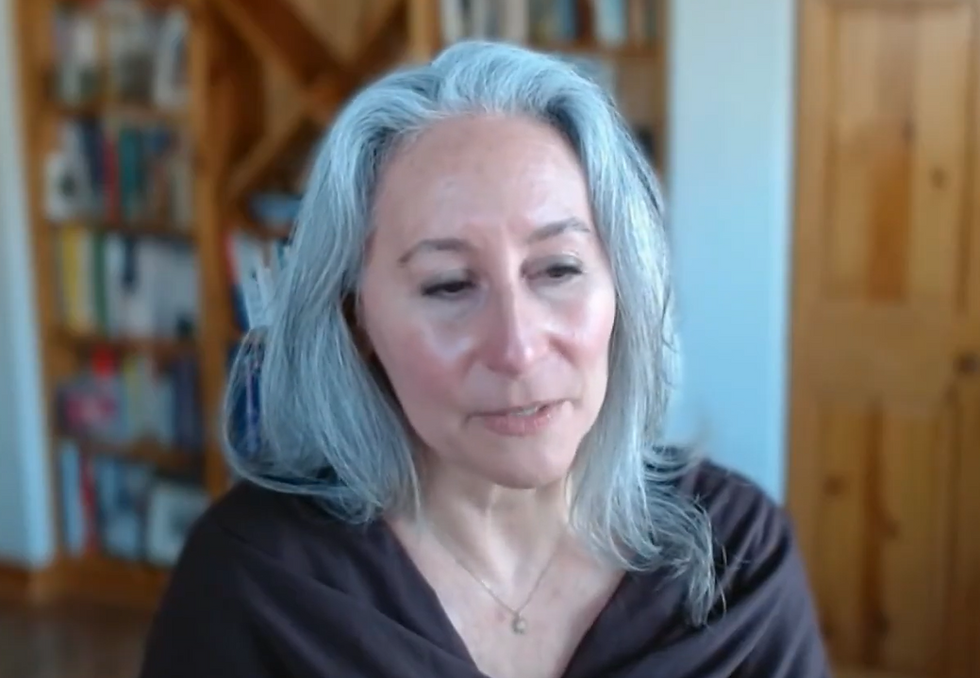
We are joined by Simla Somurk, MBA, certified nutrition consultant, and certified holistic health coach. Similar reversed multiple autoimmune conditions including fibromyalgia, lupus, and undifferentiated connective tissue disorder, along with chronic fatigue, IBS, and SIBO. More in,more recently she navigated her own perimenopausal transition which has deepened her work helping people, especially women, obviously, calm inflammation and reclaim their power using food, lifestyle and mindset as medicine. What I love about Simla's approach is that it's both science-based and soulful. She's seen the wellness industry from the inside, including sea-level roles and supplement companies, and she's passionate about helping women out, overcome and cut through the noise. Simla, we are so excited to have you here with us today.

Simla Somturk: And I am so thrilled to be here today. Thank you for having me.
Stacy Griffin: All right, so let's go ahead and start with your story. You've walked through multiple diagnosis, and now perimenopause as well. Can you share what the journey looked like for you and how it shaped the work you do today?
Simla Somturk: I absolutely can. Um, with the benefit of hindsight, I can actually trace my arc of autoimmune back to my earliest memories of when I was three years old. Um, so I'll give a very brief overview of the greater journey. I'm happy to dive in into any bit of it and I'll follow your lead on that. Um, but I find that it's these little clues that can really help people say, "Oh, I've never connected those dots before for myself." And so, that's my intention in sharing the larger arc rather than just starting when my autoimmune actually set in, because that was by no means the actual beginning of when things became more felt and visible. Invisibly-visible if you know what I mean. I know you do. Um, so three years old, I would have chronic ear infections and I had ear tubes put in. Um, you know, here we are 43 years later. I, I know that um, no more than that. I'm sorry, bad math. But here we are many decades later and I know that a dairy allergy was instigating those ear infections which later in life would um, worsen my immune system even more and show itself as very severe asthma and a lot of antibiotic treatment back then.
As we know, antibiotics can truly be lifesaving and they can also decimate our gut and the integrity of our gut lining and our immune system in turn. So, you know, talk about layering throughout a lifetime of dealing with chronic infections like that. I'm fast forwarding to when I was in my early teens is when the first signs of IBS showed up. Um, with severe gastroenteritis, stress induced and um those remained a mystery. I was told by doctors, you're too young to have this. What's going on? And into my 20s, now we're looking at um play hard, work hard. my uh first phase of my career, I was in management consulting uh, coming out of undergrad and for about 10 years and um, really long work hours but also having a ton of fun traveling in the country. Uh, but also, uh chronic bronchitis and more IBS, constant um issues with constipation when traveling and um feeling really off, having mystery illnesses, having mystery infections, um and again worsening asthma. That's when that really began to show up.
I was on two inhalers, one long-term, one acute. It never really connected the dots again. And then fast forward again, I'm in my MBA program. Um, in the right in the middle of it, uh, I started becoming highly allergic to eggs, hives, and grass. So, I would touch grass and my hands would blow up and turn bright red, and all felt super random. Um, in that time I also contracted a really rare disease that there was an epidemic in Philadelphia where I was actually living, and I contracted Legionnaire's disease. That is how I would pick up the smallest thing like the CDC called me and they were like, "Hold on, what? Where it..." I contracted it at the same hotel where the epidemic happened you know decades ago. there's like write-ups about this. So, but no one else did. So, that's how uh raw my immune system was in terms of being uh susceptible to those kinds of things. Um, along the way, I also, this is again all connecting the dots, I had a very minor achilles injury when I was in my early 20s, which was treated with cortisone shots.

Simla Somturk: Again, the benefit of hindsight, I know know I now know that they were um, overdosed at very, very high levels and it caused a massive infection, massive where my entire area, my foot, my tendon, um the my heel deteriorated, turned black. And so, that festered for a decade and I didn't even know that until all this other stuff came to be. Um, and you know we there's a lot of talk about how autoimmune is connected to viral infections and a variety of sorts. And um you know in this case um it was just a perfect storm of so many different things.
Um, so I'm done with my MBA and I go back into management consulting for a couple of years. And uh, where it all came to a head for me is I got on a plane one day. I was living in San Francisco and I was flying to my client on the east coast to run some workshops. That was on a Monday and by that Friday, I flew home and I couldn't walk and I, within a course of a week I went from what was my normal to I had to get a wheelchair at the airport because I couldn't walk the distance to go get home um, in a car.
So, I was still in denial. I thought this is just an injury. I wore heels um for the workshops. By like late that week, I was in sneakers and my boss actually pulled me aside and like, "What the heck are you doing? This isn't professional." I was like, "Well, my foot hurts. I had think I have an injury." So, I went home, kept working from home like 60-hour weeks and going to a podiatrist to look for the injury, you know, x-rays, scans, all that stuff. I thought it was my bad ankle. like I thought that had something to do with it, but it wasn't. Um, for which, by the way, I had been on about a year's worth of antibiotics a couple of years prior to that. So, again, all totally snowballing into this moment. And so from there, my symptoms related to what I now know to be my autoimmune set in in rapid succession. And I, after like 2-3 months of trying to navigate this keep working in denial, I just couldn't anymore.
Um, I ended up needing to go on short-term disability. And um I had seven pages of symptoms I was tracking because, you know, my analytical side kicked in. I was like, "What the heck?" And I was seeing all these specialists and everybody was saying, "Nope, nothing's wrong with you. your scans look fine. Um, I even went to one of the top neuropathy, the head of the division at one of the top universities um, excuse me, hospitals in San Francisco. And he did his, he pricked my leg and my feet with um, his test that took about two minutes for which I probably paid about 800 some dollars I remember for 15 minutes of his time. And I was told, "You don't have neuropathy." Meanwhile, I literally couldn't walk more than or stand more than 15 minutes a day. Not to mention brain fog, extreme fatigue started setting in. I was bumping into walls. I was becoming extra sensory uh, sensitive to anything from sound to light. And um, I had to reread things multiple times to recall anything.

Simla Somturk: So disability it was um, and so, that brought me up to that point. I still had no answers. Um I was next misdiagnosed with my early um set of diagnosis, which ended up being um, Lyme disease with some of its comorbidities. I hate that word but that's what they call them. Um, and but it was so much of um a tug-of-war in a couple of doctors disagreeing whether it was Lyme or wasn't Lyme. I actually ended up um, going to three, four or five specialists. finally connected with a rheumatologist who obviously knew the world of autoimmune but also knew and was the first person in the state of California to have diagnosed Lyme when it first arrived there. So, I found someone who was able to look at the fuller picture, and she's the one who diagnosed me with lupus and she's the one who also said, "and undefined connective tissue disorder," like they're a part of a spectrum. Um, and um, I ended up going to a university study in New York, um, one of the top hospitals there that had a center that actually studied Lyme disease.
And I was there for three days, um, with a lot of blood tests and memory tests and psychiatric tests, and um, their conclusion was so inconclusive that they said the likelihood is that you do not have Lyme. So it was also a method of elimination. And so that I parked away. I said, "Okay, that's enough for me at this point. I'm fairly confident I don't have Lyme disease. Then what else do I have?" And as I found my people, my village, my amazing, incredible health-giving providers that heard me, saw me, and treated me as a whole person. The resulting diagnosis at the end of the day ended up being fibromyalgia, lupus, undifferiated connective tissue disorder, as well as multiple chemical sensitivity, chronic fatigue syndrome on top of the IBS, the chronic asthma, chronic bronchitis, and all these other things that had come along with me. Of course, they don't just go away. So, um I'll pause there.
Alysia Thomas: Mhm.
Simla Somturk: Um, that that was kind of the journey into when everything came to a head.
Alysia Thomas: That is quite the journey, girl. That is quite the journey. And the the more people we talk to, the more we realize that everybody has everybody has a real journey behind their when just the years it takes to get to a diagnosis. The number of of specialists and doctors and appointments and tests and labs and all of these things, it, you, you really have to keep advocating for yourself to get to those answers. And it really comes down to finding somebody who will listen. Like you said, you've had to who who knows how long it takes people to find a provider that will hear you. That will hear you, that will take into account the whole picture. So, so important. So, you've really learned a lot along the way, and I love that you're here to share your knowledge with us. Um, switching gears just a little bit, you have worked inside the natural products and supplement industry...
Simla Somturk: Mhm.
Alysia Thomas: ...at a high level and I think that's a really unique perspective. So, what did you see from the inside that most women don't realize like especially when it comes to supplements and health hacks?
Simla Somturk: Oh gosh. Um it's been an interesting um exploration for me what it means to be in corporate. So that's a whole part of the story in itself. But for the supplement industry and the health hacks and all this stuff, um the the good side of things is that 20 years ago when I was going through my exploration and journey and healing attempt, um this was all very niche. And so supplements were kind of there, kind of not, and um fast forward to today also again, you know there are there's such a proliferation of supplement companies, and every you know conversation around supplements you know is inadvertently you know, tied to this hacking mechanism you know, and fads and trends, and um, there's also a lot of mass um information now and a lot of it can be misinterpreted. A lot of it is sensationalized, a lot of it is clickbait and a lot of it is completely taken out of context.

Simla Somturk: And there are a lot of incredibly cheap, low-quality um, just people trying to make a buck um type of supplement companies. That really scares me because um, best case scenario, you're wasting money and time taking them, but worst case scenario, they could really either hurt you, or you might really not be getting what your body truly needs when you you think you're doing the right thing. So, it's really disturbing to me and part of the reason why I'm back doing the work I'm doing.
Stacy Griffin: That makes sense.
Alysia Thomas: You are doing work that is very needed, very much needed. It is confusing and when you are on your own journey and you're looking at all the things - I mean we always say between the three of us sisters we've tried it all, we've tried all the things, you know. It's a hard to know thing.
Simla Somturk: It's really hard. Let me give you just one example. Um, turmeric was in the news for a while. It's been it's been hot for a while, right? It's anti-inflammatory. It's been used for millennia in um, traditional wisdom and medi, you know, and more indigenous practices longer than we know. And it's a very, very powerful, beautiful plant compound that has many benefits. Um typical to our culture sometimes, you know, a lot of people think more is better. And so now we have instances of toxicity. And if the supplement is a low-quality supplement that truly is too much of a good thing, and not formulated appropriately or correctly, um you can be in a lot of danger and people have um really suffered from that. Um, but if it's done well uh, with the best of quality and um, appropriate formulation and or first and foremost in your diet as a whole food prepared correctly then then you get all the benefits and it becomes a part of your beautiful body and does what it is intended to do. Um, so there's just that one example about of a supplement that can go really wrong or really right depending.

Stacy Griffin: I really love that you bring that up because I love turmeric, but I learned a long time ago that the best way to get it was through my food to like add it in and use it in my food because I went on one supplement very much like you're talking about and I had really bad effect and I thought, "Oh, maybe I'm allergic to turmeric." And what I didn't realize was that I was just OD-ing on it. So, um, you you do make a very valid point and I, I can speak to that very, very clearly. Um, yeah, sadly I can speak clearly to that. All right. Um, one of the big reasons why we wanted to chat with you is because of your focus on perimenopause. So, I'm going to ask a question that I think will be something our listeners will be refreshed to hear that there are people who actually care about this particular aspect of being a woman.
Simla Somturk: Yeah.
Stacy Griffin: So, many of our listeners are obviously dealing with autoimmune flares and that of course intensifies when you add perimenopause to the mix. So could you explain to us maybe what's actually happening our in our bodies during that time and why it feels like everything is suddenly louder.
Simla Somturk: Absolutely. Um, so by virtue of having lived through this um incredible transition myself, and I still am. I am not menopausal yet. I haven't reached reached my uh as currently defined 12 months from my last menses. Um I'm definitely in the throws of it. Um here are some common things women can expect and will likely experience um through this transition. Actually, number one, it's different for every single individual. Every woman's perimenopause journey will be her own, and we're still figuring out which um symptoms qualify for perimenopause and um what to pay attention to without now that it is getting a lot of great and much needed and overdue attention. We also need to be careful not to overshoot and then um, you know tie everything back to oh it must be perimenopause and then overlook something else that may seriously be, you know, um needing separate attention.
Not that anything in our bodies is separate but you know what I mean. So perimenopause is when we enter the transition as women. Every single woman will go through this is when our hormones shift and adapt to this life stage. Um primarily defined by declining estrogen levels, declining progesterone levels, and declining testosterone levels. Those are our main sex hormones. Um for women primarily estrogen and progesterone. Um, now hormones control pretty much everything in our body. They are the command mechanisms for do this, don't do that. And they are integrated with our immune system, with our gut, um with our nervous system, our brain functions of the whole bit, mood to sleep to appetite, um cardiovascular health, our musculoskeletal health, it's all connected. Now, focusing on the immune connection, those hormonal shifts, I'm finding - and I'm digging into the research about, you know, what what is out there now. And I don't yet have figures or numbers, but my active hypothesis is that um, perimenopause can more readily trigger autoimmune whether you don't have it yet or whether you have one or more autoimmune but you may be triggered to have additional ones and/or it can make it worse.
And so there's just such a perfect storm going on and everything being so interconnected. We have to recognize that there there are combined symptoms and then there are overlapping symptoms that can compound on one another and really end up um creating an incredibly chaotic environment in our bodies and, and, and of course spill out into our entire life.

Alysia Thomas: Yeah, just yeah. That you just described like exactly my experience with my, within my body and brain in the last year. Um that's why I was so excited to interview you is because this has been a very, very real experience for me for the last year and it has made me question my sanity. It's made me question my marriage. It's made me question so many things. Um, and I do think that the vast majority of the stuff I'm dealing with is tied back to perimenopause, but when you do have that autoimmunity factor added, it gets a little trickier. So, this is where it's really important for women to be taking very good care of themselves, which we're not good at anyway. Like, we're not taught to do that at a young age, to take good care of our bodies and our minds.
Um, and I will say the benefit of perimenopause and decreasing estrogen is I have no more shits to give. And it's actually very freeing to be able to just say...
Simla Somturk: Exactly.
Alysia Thomas: "Oh, I don't do that anymore. I'm not doing that anymore. That's not serving me. That's not helping me." and being able to let go of patterns of behavior or whatever it may be that have been adding to the struggle. So, um yeah, all of that. And I'm sure people listening are like, "Yep, yep, yep, yep." All of those things. So, one thing we talk a lot about on this podcast is that feeling of depletion. When you're living with chronic illness, um we're just we're exhausted. We're exhausted to our bones. And so could you tell us what what are the biggest drivers of fatigue in perimenopause, especially with women that have autoimmune conditions? Where does that where should they start with addressing that fatigue?
Simla Somturk: Oh goodness. Um, if I, you know, it's such a circular situation. It's like everything being so interconnected, but you've got to start somewhere, right? And you've got to start with your real life within context of what's going on for you right now. Um, so speaking generally as I must right now, um there are three things that I would encourage every woman to pause and, and, and give a little space for to see is this something I can optimize more right now, if at all, if I've especially if I've never really thought about it before. Number one, blood sugar control. Now, here's a situation where, like you said, Alicia, Alysia, it's feels chaotic. You can feel like you're losing your mind. You can feel like you're use losing your whole self. You are questioning your sanity. You um barely have enough to get through the day. um busy doing everything right. We're typically at the peak of our careers, we may still be raising younger children and were once a parent, always a parent. And also, we're likely caring for aging parents. Um, hence the sandwich generation at the moment. And you know, we have our relationship that can be taking a toll.
So when everything feels like it's falling apart, one of the best things I feel we can each do is start with what you can directly control. The, the feeling of control, as um as much of an illusion that can be in reality sometimes. There are things you can take back and control. Your blood sugar levels are one of them. What you put in your body, quality, the timing, the amount is something directly in your control. As hard as that might feel because you're so stretched for time and so stretched potentially budget-wise as well. There are a lot of potential constraints. But there are immediate things you can do literally starting with your next choice going into the kitchen and when to start getting that under control because blood sugar levels will impact your energy. They will impact your ability to have better sleep. They will impact your brain to be able to function better and put itself into balance or homeostasis better um to better focus.

Simla Somturk: So, when I have clients with ADHD, for example, which I know personally has been a big piece of my changing brain, like holy moly, um, blood sugar balance ties into all of that, plus inflammation. So there's a lot of myths around fasting, intermittent fasting um and and variations of that, like you know, taking us back to earlier in the conversation around hacks and trends and all this stuff that has been a big disservice to women because all of that um, doesn't always work for every woman in this situation and can really backfire, especially when We still are looking at a lot of research around matters like that being done on men first of all, um, let alone um on perimenopause age women let alone those with that whole other wonderful layer of autoimmune on top. So there's a lot of uh, personal tweaking and awareness and choices that have to be um, integrated and defined into what does achieving blood sugar balance mean to you.
Alysia Thomas: I feel like we could get into a whole episode just on blood sugar and maybe we should...
Simla Somturk: 100%. And maybe you should.
Alysia Thomas: ...should, because, because I, I'm, I'm sitting here listening, and I'm like how, I mean aside from like getting a blood sugar a blood glucose monitor um and and carefully curating what you eat. Um it's it's not as easy as one might think to get a handle on that, right?

Simla Somturk: Right.
Alysia Thomas: I feel like there's a whole lot more. Don't don't let me sidetrack you though.
Simla Somturk: No,
Alysia Thomas: That was the first I was just thinking.
Simla Somturk: For sure there is. And so that's one thing,
Alysia Thomas: Yeah.
Simla Somturk: Right, of maybe two or three quick things that we can do. The second is sleep. Sleep is glorious. I don't know why we fought off sleep so badly when we were little. Now it's like, "Can I please go to bed? And I look and it's like 7:00 p.m.
Alysia Thomas: My favorite thing.
Simla Somturk: It's like yes, wisdom. So optimizing our sleep which may actually be a whole conversation of its own as well. It is so crucial. Um, also more recent research is showing you know, dreaming is glorious in itself, but there's so much happening in the brain, but you know more research showing like it's cleaning itself out. And so it's been tied to you know, poor sleep has been tied to Alzheimer's and other um,conditions related with brain aging um prematurely aging more and more we seem to be seeing especially with um perimenopause that is not harnessed and and treated appropriately. So sleep in itself is um, and, and again it's such a deep and important subject if I were to give some general guidelines it's to find um a sleep cadence you can stick to and do it every day. Find your evening routine to wind down your body and your brain. Our bodies like routine just like kids, just like dogs.

Alysia Thomas: Yeah.
Simla Somturk: Like we are quite simple at the end of the day. And to simplify things, to really look for those pillars, sleep is one of those things.
Stacy Griffin: I love that you mentioned that because we have what are called the Big Six and sleep is one of them. Diet is one of them. Um exercise...
Simla Somturk: Yes.
Stacy Griffin: ...having a good growth mindset and a good sense of humor helps. And there's there's just a lot of reason why those are our tenants here at Autoimmune Adventures.
Simla Somturk: Yes.
Stacy Griffin: But I love that because as you were talking about blood sugar, I was thinking, well, obviously we're using food to determine how we feel. Our lifestyle determines how we feel. Mindset is medicine, and so is lifestyle and so is food. So if we take those and think of them more like these are the things that are going to help heal my body. How do we take someone who's feeling overwhelmed? They don't know where to begin. What are three foundational shifts that create the biggest impact? So, I think you've already mentioned blood sugar and sleep.
Stacy Griffin: What would be your third?
Simla Somturk: There's a lot to choose from.
Stacy Griffin: I know.
Simla Somturk: I, I love your tenants. Um I love them all. Um and they're all really important. Since our common area here we're talking about is autoimmune, one person's medicine can be another person's poison, at least currently if depending which part of the spectrum you're on in terms of your healing journey. But I would highly recommend you really get to know your body well and um do a protocol like the autoimmune protocol. Tests can only go so far. I have found uh, personally and professionally like you can take food allergy tests. You can um do all that, but until you're removing the food for a while and then reintroducing it in a very particular manner and a very um structured protocol, you may not ever get to truly uh, what your food friends are and what your current, at least, food foes are. Um, which by the way can heal over time. Doesn't mean just because you can't eat something now and feel good doesn't mean that's forever. I have many and plenty of stories about that.
Here's just one example. I had a client um with autoimmune type 1 diabetes. So, we went through my version of the AIP which was a challenge elimination challenge. I had built 20 years ago. And one of the findings, it was so anti-textbook, but it was exactly what um we and and we tested it twice to make sure -when this person ate soy, their blood sugar tanked. like it's a protein and you usually eat it with other things like let's say...
Alysia Thomas: Yep.
Simla Somturk: ...there's fiber in the meal and whatnot like that is not supposed to happen. But a blood test or other type of allergy test was not going to ever reveal that.
Alysia Thomas: Right.
Simla Somturk: So that is of critical importance with someone who's managing insulin intake with type 1 diabetes um as a life or death matter literally. And so that's the type of insight you can get to in a relatively short amount of time. Um those are three things. It's like choosing between your, you know, kids like who's your favorite. It's not really possible, but um it's doable because they're tangible things you can think about and maybe do even starting today or tomorrow.
Alysia Thomas: Right. Things that are within your control, like you said, things that you have within your control. You might not be able to control your environment all the time or the toxins you're exposed to all the time or there's so many things that are out of our control. But we control what we put inside of our bodies, and we control what we allow our mind to focus on. Um, I would like to think I can control my sleep, but my body is not really doing so well with that these days. Um but yeah, it is important. We have a whole we, I think we have a couple different episodes on sleep hygiene and and sleep wellness because it's...
Simla Somturk: Right.
Alysia Thomas: ...so, so vitally important and that is a notorious issue during the the menopausal years, insomnia and and trouble getting quality sleep. So I feel like that's really relevant as well.
Um let's talk about brain fog and mood swings because those two symptoms alone can really just shake a woman's confidence. I know it is that way for me. Um, oftentimes I'll just be like, "What is this word I'm thinking? I just can't. I just can't." And I'm trying to have a conversation and sound like a like a rational human, like an adult, and I'm like, I know I'm not stupid. I know I'm not stupid, but I cannot put my words together. It drives me crazy. So, what's happening there?
Simla Somturk: Mhm.
Alysia Thomas: And what can women do to feel a little bit more stable and clear? I know creatine has made a difference in my life, but um, jump into that and see see what what do you have to say about that because that's a big...
Simla Somturk: Sure. Brain fog. Yes, it is. Um, so we've already touched on a number of factors that contribute to it that can make it worse and better. Um, the importance of rest and sleep, the importance of changing hormones. If you think about it, your body's trying to figure everything out right now. It's like, you know, it's like, gosh, if I try to find a good analogy, it's like um, you've dismantled this huge puzzle and you're trying to put it back together again in a diff, completely different way. And so having a bit of grace, I think, goes a long way with ourselves and each other.
Um I know for me that's actually um, related to brain. I don't get hot flashes. Like I may have had 10 in the past 10 years, and I actually like them because I'm always running cold.
Alysia Thomas: Yeah.
Simla Somturk: But like for me it was panic attacks and anxiety, and um for the life of me word recall especially names and that one word I know, like I speak English I know this word and it's not coming. Um, and the fogginess I experienced early on when um all the shitskies hit the fan.

Simla Somturk: Um it comes down to the combination of how well are you nourishing your cells? How well is your mitochondria, your energy system working? How well is your gut working? Is the lining of the gut is your gut integrity intact or does it need help and work to heal? Um, and are your hormones being supported whether you're choosing to look into menopausal hormone therapy, previously referred to as HRT or hormone replacement therapy. What does that look like? Have you found your great um, the best combination that works for you given your potential risk profile or not?
Um and I think I mentioned sleep. Did I mention sleep already? And and the blood sugar balance, like if your blood sugar is either tanking or too high, forget about it. Your brain is all over the place. Um blood sugar, we need it first for our brain. If our brain doesn't get enough sugar of the right amount and timing, it's it's gonna make you crave sugar. It's going to crash you. It's going to do things to you. This is not about um self-control. This is not about uh what's again word recall? What's the word I'm looking at? Like...
Alysia Thomas: Willpower.
Simla Somturk: Thank you that one. Um, no. Your body will make you do certain things because it's about survival at that point. And so when your body's trying to survive and find balance, there's not much left over for anything else. And so giving it, laying the foundations, giving it what it needs steadily, consistently, lovingly, um, will help quiet that noise. So that you have enough left over for the business of life.
Alysia Thomas: I love how you put that. "It will quiet the noise so you have enough left over." Oh, I got some work to do!
Simla Somturk: Don't we all? You know, and that's not even touching on the incredibly important neurotransmitters in our brain, but also in our gut. And we have receptors for those. We're finding in pretty much organ, every organ that's looked at. Um, dopamine, serotonin, these are directly affected their volumes and availability and receptibility. Um, I I think that's a word. I think I used it right. Is all affected by our hormones. And as estrogen declines...
Alysia Thomas: Yeah.
Simla Somturk: ...as progesterone declines, those are really struggling. And it's like, okay, how do we get back to homeostasis? How do we feed and get the amino acids we need? How do we get the right type of um carbohydrates and fuel we need? How do we get the good and healthy fats to support our hormones? our body's ability to repair itself, remove the barriers that are inflaming it and harming it so that we quiet that noise and so that we have those nutrients to let it do what it does best, which is reach balance, reach homeostasis, and repair and heal itself.

Stacy Griffin: There's something beautiful that happens when we are able to understand the importance of homeostasis and then find a way to achieve it by actually paying attention to what our body is asking and then getting help where we need to get help, so that we can achieve that because I think that often people think of perimenopause as a complete nightmare and one of the things that I love is that that isn't how it has to be.
Simla Somturk: No.
Stacy Griffin: It can be powerful. We can be powerful.
Simla Somturk: Yes.
Stacy Griffin: Um it's not just a crisis. And if we do that reframing, as you have often been known to say, that is something that's really beautiful. So what mindset shift do women need to move from feeling broken to feeling powerful?
Simla Somturk: Um, this always gives me goosebumps, cuz here we are feeling utter chaos and like we're losing our minds and we're losing ourselves. Um, you know, everything is holding on by a string it can feel like. And so I was just journaling about this this morning. So for me, and this is where I'm just so passionate that it's been why I again I came back to this work, is not just per menopause but with autoimmune the shift I believe is to see this as an invitation, to tap into and activate your body's innate potential to heal. Yes, fundamental life wants to live. Like, how do we lean into that and how do we not fight it? How do we find the flow to help make that more possible?
But it's even more than that. It is how do we create a more connective, intuitive, trusting, loving relationship with our bodies and yourself. It's it's asking the hard questions. Like this is like come on now. Like we're shedding those brain cells that give a shit. We're wiser than we've ever been. We are queens earning the right to become crones and reclaiming our right to be the powerful fuller beings we are as women. We create life -literally. Like how about we finally fully walk and step into that and ask the hard questions of, "what are you putting up with?" What old habits and beliefs no longer serve you that did and possibly greatly they could have helped you survive and succeed and be the high achiever you are and have been and achieve and accomplish all that you have in your big beautiful life. But some of those things are now not right anymore. In fact, they might be undermining you. What are you afraid of? What are you maybe hiding from?
And this is that opening to and and and that crack where the light is finally shining through and it's saying come hither, come heed me, listen to me. And we have one beautiful body and she is trying to communicate first with whispers and then when we don't know how or we don't make time or we are too you know, too wrapped up in the business of life to not want to listen or you know she needs to start screaming And and in my case, she pulled the rug out from under my feet. Literally, I couldn't walk. That's what it took for me to say, "Oh, that was my autoimmune. The best worst thing that ever happened to me." And I'm thankful it happened earlier in life, because it changed literally the trajectory of my life. And I, I I'm I'm thankful for everything that it made possible, because the beautiful thing to think like who are you becoming through this? It starts with just starting to give your moments of stillness where you can hear her. She will tell you. She's already telling you exactly what's working for you and what not to do and listening more and more. Not the hustle, not the pushing, not the it's not a fight. It's it's how do we harness um this gift that we've been given to enter what might possibly the most amazing and powerful phase of our lives yet.
Stacy Griffin: I agree. I think that we often sell short the power of the space between childbearing and settling in and rocking and enjoying our sunset off of our front porch. There is this block of time that exists that is what I like to call the time of the sovereign woman. I am fully filled with who I am and my power, and I understand it and I want every woman to feel that. I want them to feel that power and understand that what they have to offer..
Simla Somturk: Yeah.
Stacy Griffin: ...is something that is solely theirs to give. How amazing is that? How amazing is it to know that in our power we can not just change our own lives but the lives of other people because it when I look back
Simla Somturk: Yeah.
Stacy Griffin: In my life I think about the people who made a difference in my life and they are women who are now my age right they were my age when they were telling me no you don't have to do this, you can go out and achieve all that you want to you have power and I was like 20 and clueless. It doesn't have to be a bad experience. So, thank you for sharing that. That's really beautiful.
Simla Somturk: 100%.

Alysia Thomas: That's so beautiful. I got chills listening and and I definitely saw little moments that I've been experiencing that really align with exactly what you were saying. Um, but I do think it is it's especially hard as women to allow yourself the time to listen so closely to your body. Um, as you said, she will whisper before she screams,
Simla Somturk: Yeah.
Alysia Thomas: But um, we'd rather answer when she's whispering. We'd rather have a gentle transition, have gentle changes than than these tumultuous ones. And I'm guilty of not listening. I didn't I've probably been in perimenopause for I don't know, probably pre-covid and when anxiety just came on out of nowhere. I've never had anxiety in my life and it just descended on me and I never once thought it could have anything to do with perimenopause. I just thought it was something going on with my with my gut health, maybe my autoimmune issues. And um, so if for women that are listening, I hope that no matter your age, you're paying very close attention to your body. If you are approaching those perimenopausal years, you need to be aware of the changes that are going to start happening. You need to be aware that there is help. You need to be aware that there are people that know what you're going through.
Um, we would love to we would love to hear more from you, Simla. I think you have just a wealth of information. Um, but before we wrap up, we wanted to see if what are the best ways that our audience can contact you?
Simla Somturk: So, uh the best single way would be my website and that is healthcraft-with-Simla, and um from there you can choose to uh sign up for my email list. I attempt to share insights and a lot more of these types of guides, um, recommendations, stories, um, through that list. You can also choose to, uh, sign up for a call with me to see, uh, if we might be a good match for working together. I've also begun writing on Substack, and so same HealthCraft with Simla, you can find me on Substack or just DM me. And um, I love getting to know women individually genuinely because we got to stick together. We we're more powerful together. And so, um, any which way feels comfortable for for anyone listening to reach out, um, I'm happy happy to say hello.
Alysia Thomas: Thank you so much. We loved hearing from you. I am sure we're going to have you back because I just I myself have so many other questions for you. But we've got to wrap it up. But we wanted to um, thank Simila for coming on with us today and sharing her knowledge, sharing her wisdom and um, your beautiful spirit. Like you just have the most beautiful spirit and I love that. Um, we as a reminder to our listeners, you're not broken, you're not alone. This chapter of your life can still be a very powerful chapter.
We'll see you next time on Autoimmune Adventures. And remember, you are worthy of joy. Disease does not define your life. You do.
HELPFUL LINKS:
Simla's website: https://healthcraft-with-simla.kit.com/welcome-signup
Simla's Substack: https://healthcraftwithsimla.substack.com/


Comments