80 - When Chronic Illness Meets Adventure: Adaptive Sports, Foraging, & Emergency Prep with Antoinette Lee
Alysia Thomas: Hello, and welcome back to Autoimmune Adventures, the podcast where we talk about what it’s really like to live boldly, honestly, and fully with chronic illness, trauma, and all the unexpected twists and turns that life throws your way.
Today’s guest is somebody whose story truly embodies what we mean when we say a diagnosis or injury does not get to define the size of your life. We’re joined by Antoinette Lee, MBA—a polymath in the truest sense of the word. Antoinette brings together deep experience across military medicine, business leadership, wilderness survival, media, and inspirational communication, all while living her message in real time.
After surviving a traumatic brain injury, spinal damage, and severe PTSD, Antoinette hit rock bottom in 2014. She was unable to eat or drink for weeks, relied on a walker, a service dog, and full-time care, and was preparing for what she believed might be the end of her life.
Today, she’s a sponsored adventure sportswoman, outdoor industry influencer, motivational speaker, health and wellness columnist with a global audience, and host of the upcoming New Normal Big Life podcast. She’s also the author of the forthcoming memoir, Four Hours to Live.
Antoinette’s core message is simple and powerful: you don’t need to be extraordinary to live a big life—you just need the right steps and the belief that it’s possible.
Antoinette, we are so honored to have you here. Welcome to Autoimmune Adventures.

Antoinette Lee: Thank you so much for having me. I’m excited for this conversation.
Stacy Griffin: And we’re excited to have this conversation with you. All right—so you’ve lived through multiple “new normals” in your life. When you were at rock bottom in 2014, preparing for what you thought might be the end, what was the first internal shift that made recovery even feel possible for you?
Antoinette Lee: Oh, I love this question because it’s something that I think is socialized out of us as human beings—especially as women. And that is the belief that I might know my body better than all of the people with the letters behind their names.
And when I stopped listening to advice that—even when I was given it—felt wrong, but I thought, “Well, I have a medical background, but I’m not an MD. I should listen to the MD and follow all of the advice,” it was making me sicker and sicker and sicker until I almost lost my life.
That pivotal shift was deciding to be my own advocate and listening to my body more than the talking head in front of me, or the talking head on my screen, or anyone else in my life—including well-meaning friends and family that said I should do this and not that. And you know what? They were all wrong. And my recovery—and if you look at my before-and-after photos—proves that.
Becky Miller: That is awesome and so inspiring, honestly. And I think that’s something that will resonate with a lot of people because I think it’s almost societal, to like you said. it’s not that we don’t respect doctors. Like, all of us here have a very good care team. We respect good doctors, but it just, like you said, doesn’t change the fact that nobody knows your body better than you know yourself. And you have to trust and believe that, and that it’s okay to advocate for yourself. It’s important to advocate for yourself.
So, kind of moving forward, you have a very unique background. It spans military medicine, business leadership, and wilderness survival. It’s a very unique combination. How do you feel these experiences reshaped the repeatable framework that you now teach? And what is a small step from that framework that our listeners could maybe realistically try this week?
Antoinette Lee: Well, I believe that building my new normal required looking at my life and what had worked and what had not. And I definitely brought that sort of analysis from my MBA program. Then all of my health training, I brought that into what I was doing in terms of creating my new normal. And then technology — believe it or not — technology has been very helpful in a lot of ways because I use it very responsibly.
But there are answers out there. The same answers that your MD can get, you now have access to through things like PubMed and the CDC and the NIH and other databases. And so you can use that information to help you be a better healthcare consumer and make wiser decisions about your health. And I have changed the way that I interact with my healthcare team because of it.
And so the one thing that I would tell everyone is to learn to become your own patient advocate and advocate for those that you love. But there are some very specific things you need to learn in terms of self-advocacy because I don’t often say there’s a right way and a wrong way to do things because there’s usually a lot of different ways to do things. But in this case, there is a right and a wrong way to do it.
Meaning, if you do it — air quotes — “right,” then you’re going to get the result you were hoping for.
If you do it — air quotes — “wrong,” then you’re probably just going to be labeled combative.
And I have been labeled in my record a combative patient just for talking the same way that I’m talking right now and saying, “I want a moment to research what you’re recommending, and I will call your office back when my research is done and tell you my decision.” That got me a label of being combative.
And so I did all the air quotes “right” things, but I still got that label.
But it was harder for them to just dismiss me as a patient and what I wanted to do and the course of treatment I wanted to take when I did the air quotes “right” things.

Alysia Thomas: So, we are huge, huge on self-advocacy, and I love your message. I love what you’re sharing, because it is vitally important that each of us realize nobody’s coming to rescue us.
This is our body. This is our health. And we have to get responsible. We have to take responsibility. We have to learn. We have to educate ourselves.
I have — and all my sisters will agree — we have each had an experience, sometimes more than one, where I go into an appointment and I walk out saying, “Holy crap, I think I know more about my condition than that doctor did.”
And honestly, the doctors… they do have limited training in some things. They do have limited continuing education. There’s a lot of reasons for that. But it is so important that when you are living with chronic illness, that you take that upon yourself as your responsibility. Your job to take care of yourself includes advocating for yourself.
And especially as women, you do have to be careful. I’ve been dismissed. It happened a few months ago, and it was extremely frustrating, but I walked out of the office. I left in the middle of an exam.
Well, then the exam didn’t happen because I left before it could happen. And it was hard to do, but it’s good to be able to quickly recognize when you’re being taken seriously and when you’re not being taken seriously. And I left, and I went to the lady at the front desk and I said, “I do not want you to bill my insurance for this because no medical service was provided today.”
And she was like, “Yes, ma’am,” you know.
And I walked out.
And so empowering yourself — when you’ve learned, when you keep your records, when you know your body well — you are empowered to advocate for yourself in those situations. And a good doctor is going to appreciate that quality in a patient. They’re going to appreciate that.
So there’s my rant. I’ll step down off my soapbox.
So, next question…
Many people with chronic illness or trauma feel betrayed by their bodies, especially in those early years of trying to find a diagnosis or being diagnosed and not having a successful treatment plan yet. How did you rebuild your trust with your body after TBI, spinal injury, PTSD, and what would you say to somebody who is right now afraid of their own physical limits and what’s happening in their body?
Antoinette Lee: Wow, that’s such a rich and deep question. I think feeling betrayed by my body was when my brain was functioning well, but not optimally, and then you don’t know what you should trust. So, if you’re having some symptoms, you don’t know if it’s anxiety or is it a heart palpitation, right? And so you have to understand how your body works so that you can understand that what feels like a betrayal is really just your body giving you information.
So once I reframed that experience as, “My body is betraying me…” Because before, I was a state champion runner. I was, as an adult, a competitive bodybuilder and powerlifter, winning titles and all the accolades.
And so when my body was so debilitated that I had to use a walker, it felt like a severe betrayal.
But I reframed that as, “You know what? My body hasn’t betrayed me. It’s giving me information that it’s wanting me to act on.” And I took that information, I acted on it, and every step of the way I got better and better and better until today.

Alysia Thomas: Very well said.
Stacy Griffin: I love that your determination is such a backbone, obviously, for you because I think that determination is something that is vitally important when it comes to chronic illness. To be determined to conquer whatever it is that’s going on. To be determined to move forward in a positive way. So thank you for sharing that with us. That’s wonderful.
Antoinette Lee: Thank you.
Stacy Griffin: All right. We know from reading up on you and learning a little more about you that nature plays a huge role in your healing story. So for listeners who are thinking, “That sounds amazing, but I’m not an adventure athlete,” how can nature still be an accessible and powerful healing tool for people?
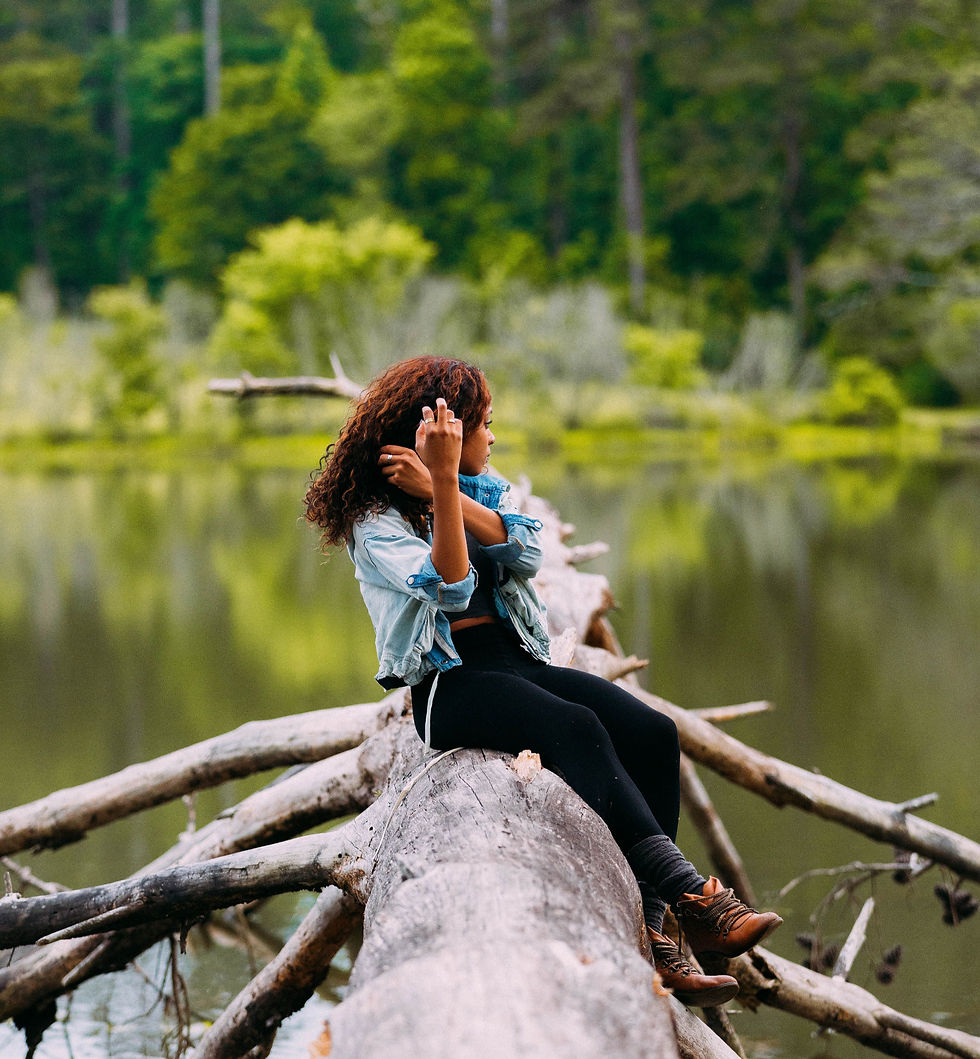
Antoinette Lee: The first step is not listening to all of the people who are going to tell you, “No, don’t do it. Don’t try it. It’s too hard.” You’re going to feel bad if you — air quotes — “fail.” People will laugh at you. They won’t want to help you with your accommodations.
So, for example, when I first started archery and whitewater kayaking, I was using a walker, so I needed a lot of assistance getting in and out of the boat. There are all kinds of well-meaning people in your life, including your healthcare team and your friends and family, who think they are protecting you by keeping your life small.
But a small life doesn’t feel like a life worth living because all that you’re doing is existing. You’re not really living when your life is small. People. human beings are pack animals. We need to be around other people. We need to feel like we’re part of a pack. We need to feel like we are accomplishing something. So when I got out of my sick bed and used my walker to go to archery classes to develop skills that would use neuroplasticity to retrain my brain for tasks like this conversation, or reading a book, or going back to school and getting an MBA…I used archery for those things, and it helped.
And that was my first time realizing that being outdoors in nature with other people, doing neuroplastic activities, was very beneficial. And then the next step was whitewater kayaking. And that rebuilt my entire body to be strong enough to not use a walker or need a caregiver.
So what I would tell people is: you have inside you the ability to do any type of nature-connected activity.
Whether it’s just rolling your wheelchair outside your house and counting the birds and identifying what birds you can see in your area…or you could get cardio exercise by rolling yourself down the street and going for a stroll. If you’re mobile, you could get up and walk. You could ride a bicycle. There’s so many different ways to interact with nature.
One of my favorite things to do in spring and summer is foraging. So I will forage for mullein — a lot of people call it mullein — and then I will turn it into a tincture, and that keeps me from having any kind of respiratory illness for the entire year. So there are so many different ways to get outside and adventure, and I love talking about that on the podcast. And I also love giving people step-by-step plans.
So, for example, you can’t just decide, “I’m going to forage,” or “I’m going to wildcraft.” You have to learn how to identify plants to keep yourself safe, and the tools that you need, and places you can go. So I give you the step-by-step. If you want to just go outside in your backyard and forage for dandelions, you can make a salad. You can make dandelion gummies. Kids love these activities also.
So there’s so many ways to get outside and adventure — low-cost ways to get outside and adventure.

Becky Miller: I love that.
I live on a small hobby farm, and I know for me, when I was having a hard time getting out, one of the things that I tried to do…We get beautiful wildflowers pretty much all year long here in Texas.
And so I started just personally cataloging them because I was like, “This is really pretty, but I wonder what it is?” And I managed to catalog like 50 different wildflowers on my property.
And just like you said, things that don’t have to cost money. And I think one of the things that I love is — because I know things like archery and kayaking and whatever, sometimes you can get those affordable, sometimes depending on where you live they might not be as affordable — but you are passionate about removing financial, social, and technical barriers to adventure sports.
So what myths have you found that people, especially people with illnesses and disabilities, have about what they can do or not do in regards to some of these activities?
Antoinette Lee: Well, the biggest myth is that it’s not affordable. Next is that you won’t be welcome. And I think the third is that you can’t learn it.
So, for example, I taught a young woman who’s never been out of her wheelchair how to adaptive paddleboard. So instead of standing up to paddleboard, she can sit and paddleboard.
I have gone mountain climbing with a young teenager who was born without arms. Well, how do you climb without arms? Adaptive sports. There is a way to adapt the equipment for every sport. I’ve whitewater kayaked with blind kayakers. So there’s a way to do it. All that you need is a desire.
And the beautiful thing is there are a lot of nonprofit organizations that will offer these experiences for free, especially if you have a chronic health issue or disability, if you come from a low-income background.
And some of these organizations will not only take the person with the health challenge, but also their family members can go with them.
Alysia Thomas: I love it, because I just realized — somebody was telling me — if you have celiac disease, that counts as a disability and you can get a free National Parks pass. There’s a lot of things… you can get a free National Parks pass. There’s a lot of states that have free passes for people with disabilities. You might have to do a little bit of the footwork, but I love how you said that the third myth is that you can’t learn it.
We have our Big Six tenants that we talk about, our Big Six principles that we live by, and having a growth mindset and a positive attitude is our first. We can learn all these things. And it’s not just going to benefit our brain from learning it — it is going to benefit our body from learning it as well.
Do we have limitations? Yes. Do we need to learn to work within those limitations? Yes. Does that mean we need to stop trying new things? No. No.
I mean, even if you’re not mobile, if you can get yourself outside — or somebody can take you outside — and you can just put your feet in the grass…That is better than nothing. Grounding yourself with nature in whatever small ways you can. Go out onto your porch. Map the constellations. There’s a million things that we can do to connect with nature in an easy way, and there’s so many fun things that you can still learn.
So yeah, you have to put a little bit more footwork in, but there are ways to do it. And I love that you’re passionate about that.
So, next question. Confidence loss after injury or illness… it can be massive and invisible. So when you’re rebuilding your confidence, what does that actually look like day-to-day? Not the highlight reel, but like the messy middle of that.

Antoinette Lee: Oh, this is a beautiful way to illustrate the health benefits and social benefits of outdoor recreation. Because as you decide to take that first step of just signing up for a birdwatching class, or a plant identification class, or an archery class…That one decision is a major confidence boost. Because if you’ve been living this really small, pulled-back, “I have to protect myself because I have these challenges” kind of life… If that has been your life, deciding to be open enough to just go do a new thing is a huge step forward and a huge confidence boost.
Showing up for the class, learning something new, challenging yourself…Even if you don’t get it right the first time. If you’ve never hit your target, if you can’t even take a paddle stroke, but you just got in the boat and started learning…All of those are baby steps toward confidence boosting. And so when you finally reach sort of the high end of mastery of that class — meaning that you can get an arrow on target, or you can paddleboard, or you can fish, or you can identify plants, every time you do that, that gives yourself this positive feeling and imprint on your mind and body and soul that, “I can do this.”
And if I can do this, I can do this other thing. And if I can do this other thing, I can do this next higher-level thing.
Stacy Griffin: I love that we don’t have to know everything now. That we can have that learning attitude and go in messy. Do it messy. There’s nothing wrong with that. In fact, some of my best memories are of the process of learning.
The first time that I learned how to grow mushrooms, it was a disaster. I had a blast learning. I was like, “This is amazingly cool, and I’ll have these great mushrooms to eat.” And then it blew up in my face and it didn’t go the way I had planned. But I had a fun time learning how to forage and how to go out and grow my own mushrooms. So that was kind of a cool thing. And it was very messy. The whole thing was a messy middle for me.
All right. You talk about living a big life without needing to be extraordinary, and I love that because I think that a lot of people think, “I have to be this amazing person to really have a big life.”
And that isn’t the case, right? So how do you help people stop waiting to feel ready, healed, or fixed before they fully live?

Antoinette Lee: Ooh, you’re actually never going to feel ready. So if you wait for that moment, it’s just not going to happen. And I think it’s because human beings just aren’t wired that way. We are wired to get out and try and do and learn because, remember, human beings learned without schools. They learned from watching and doing, failing, trying again, failing some more, maybe failing for a very long time until you get some mastery at this new thing, whatever it is.
But in modern society, we think that everything has to be perfect before I can even lace up my shoes and go for a hike. No. You can go for a hike in whatever shoes you have. It could be the shoes that you would normally wear to church. It doesn’t matter. You don’t have to have your serious hiking boots at first.
It could just be the shoes you would wear to the grocery store.
But over time, once you realize, “I really love this thing…” I don’t know, it’s like God, the universe, the things of all things just provides a path, people, resources, and opportunities for you to continue to grow in your passion.
And so what I like to tell people is that when I decide I’m going to do something, I learn a little bit about what’s involved. So, for example, when I wanted to learn how to ice fish after watching the movie Grumpy Old Men — I thought that looks like the most fun thing you can do in winter. I’m all in. So I learned a little bit about the sport, and then a teacher fell into my lap. We happened to be dating at the time, but when I first met him, we met whitewater kayaking. How’s that for community, right?
We were on a whitewater kayaking trip with 50 other men and women, and that’s how we met.
And then I shared with him that I wanted to learn how to ice fish, and he’s like, “I’m really good at ice fishing.” And now he has made me really good at ice fishing. So that’s what I mean by opportunities, resources, a path just falls into line once you make that decision that you’re going to do a thing.

Becky Miller: That makes a lot of sense. We noticed that one of the questions that you ask is, “Are you prepared to survive almost anything?” So what does preparedness really mean beyond gear, strength, or training? Especially because it’s funny, but I think people with chronic illness might hear that and be like, “Oh, I survive things all the time.”Because they do.
But from a more fun perspective, how would you explain that kind of preparedness for somebody who has chronic illness or trauma?
Antoinette Lee: I think it’s more important for a person who has chronic illness or trauma to be prepared for just about anything. And so, for example, I did a podcast episode and a blog post on preparing for the 18 potential disasters that we might experience in North America. And those are very real things that could happen.
In fact, in 2025, there were 150 natural disasters that were 50 million dollars or more in terms of cost, in places that normally don’t have disasters. So, for example, in the mountains of North Carolina, they don’t typically experience flooding, and then they had this major flooding event.
So disaster can happen to anyone, anywhere. And you just need to have a few things that make it survivable until you can either leave the area, rebuild, repair, or life becomes normal again and you have access to food, water, shelter, safety, medications, and healthcare.
And so for a person like me who has a number of health challenges, I have to plan a little bit more than other people who don’t have my challenges. But "if you fail to plan, you plan to fail." And one is none. If you have one of a major medication that you need, then you’re probably — as luck would have it — going to lose it in a flood, a fire, a hurricane, a tornado, and then you have zero. So that 90-day supply isn’t just a convenience. If you lost one and you have two others somewhere else, then you have a backup.
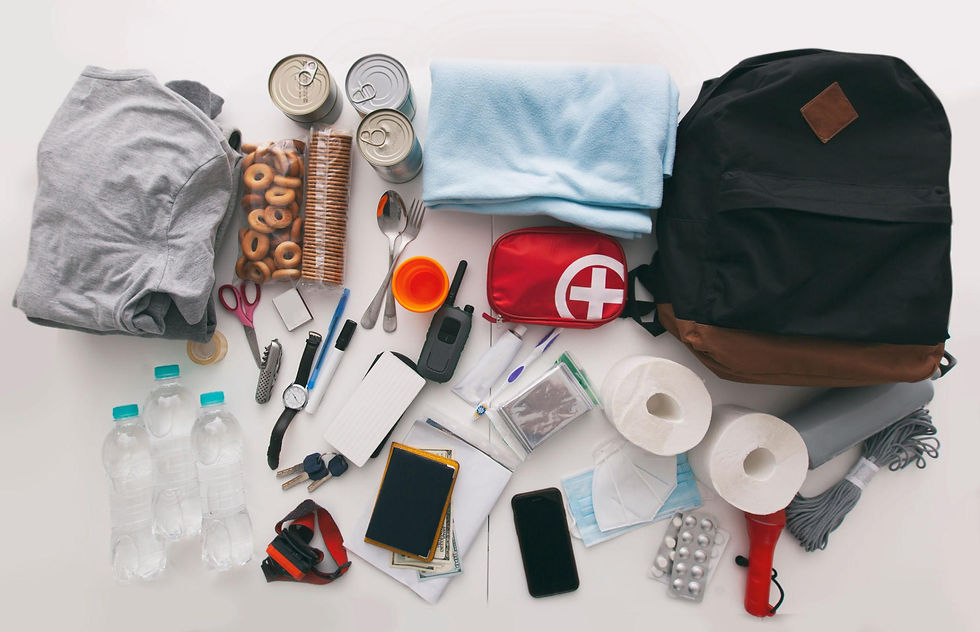
Antoinette Lee: So three is two, two is one, one is none. And so just having some simple things like a little extra food — like a week or two or a month of extra food in your pantry — having extra medication, having backups…
If you have a device that needs electricity and the power goes out…Even if you can’t afford a whole-home generator, maybe you can afford a $200 small generator that can power your most critical devices.
So being prepared for whatever means that you can survive almost anything. And then if you take it up a notch — and I’ve actually tested this out myself — I tested out, “Could we survive on just the food we have available to us, including foraging, for 30 days?”
The answer was yes. We could have gone longer. We typically will shut off the power to our home and test out what we would do if it’s the dead of winter and the power is out and you live in the ice belt. And in fact, when we first bought our cabin in the woods, I think it was three months after we moved in, the power went out for five days and Matthew became very sick. And I had to haul water and wood and learn and know what kinds of wood you can burn indoors safely because it has less creosote, and what kinds of wood you should only burn outdoors. I had to know how to start and maintain a fire, how to cook over a fire…
I mean, so many things that you don’t normally do in your day-to-day life.
But if you’re outdoorsy, if you recreate, you do those things on a regular basis. So when the power goes out, it’s like camping at home. It was no big deal for us because we practice it. We live it in our recreational lives. So I think it’s hugely important for everyone to be prepared for the next big disaster. It could be a cyber attack. It could be civil unrest. It could be another pandemic, another lockdown. You just never know.
And I’m not talking about prepping — because who can afford that, right? But I’m just talking about having a little bit extra of batteries and candles and water and water filtration and food where you can access it quickly.
And just to give you another real-world example…We lived in Colorado, and we could see wildfire on three separate occasions from our home, and were thinking we might have to evacuate in the middle of the night. But we had practiced having food, water, shelter, our important papers, the entire family in the vehicle and gone in 15 minutes. And we knew multiple escape routes. So you have to train — “train like you fight,” like we say in the military. Train the way you would live it.
And another very important thing is: you would think your family would just be happy to have a meal in a disaster situation…But after the third day of beans, you’re going to have a family revolt. So you have to think about, “What can I have at home that my family will actually eat?” I don’t use canned goods because they’re heavy. If you have to leave your house and put them in the car and just go, it’s hard to take them with you. And they only last for about two years. Yes, you can eat them once they’re expired if the can’s not dented, but I prefer freeze-dried. There’s more nutritional value.
So there’s so much to know, but I made it super easy.
Becky Miller: Yeah, it’s okay. My husband and I are a little bit of prepper geeks, too. We actually own a freeze dryer. So no, I know where you’re coming from. But I think that’s actually important because some people would be like, “Well, how does that relate to chronic illness?”
I think one of the key things that you pointed out is that sometimes people don’t think, when there's something going on, like you said, do you have enough medication? For those of us with celiac disease, do you actually have food that doesn’t have gluten in it that you could eat if something happened, you know? And like you said, you don’t need to have tons and tons of it, but just have enough on hand that you could take care of yourself for a week or two just to make sure you’re okay. And I think that’s solid advice. If you have pets, think of your pets too.
Alysia Thomas: I was just going to say — not to be like… this is my dark humor coming out in my brain…
I was like, “Yeah, when shit goes south, it’s going to be us weak, sick ones that get taken out first.”
So I’m thinking…
Antoinette Lee: But you know what, Alysia? Maybe not, because we are the resilient ones.
We’ve been through so much.
Alysia Thomas: ...well, we are resilient. Yes. And so that’s why I was going to say it’s even more important for us to prepare because we do need to have medications. Some of us might need to have devices. Some of us might have mobility issues. You’ve got to make sure you have ways to move. And that is just one more reason to work on strengthening your body. Whatever your physical limitations are, do your best to strengthen your body so that you are able to move yourself if you need to.
There’s just a lot of things…I don’t know. I think we should have a whole other episode on this, because I have all the wheels turning in my head and I’m like, “Oh geez, we’ve got some work we could be doing.”
But yeah.
Antoinette Lee: Alysia, one of the things that I would love to tell listeners is this: If you can do one pull-up — one pull-up can save your life in so many situations. We’re told that in our military training. One pull-up, whether it’s a pull-up from your wheelchair or a pull-up from a standing position, one pull-up can save your life. If you can lift your knees to your chest, even if it’s assisted, that sometimes can get you out of a tight situation if something collapsed on you. So you have to think of the ways that you could potentially save or rescue yourself despite your challenges, despite your abilities.

Alysia Thomas: Yeah, absolutely. So for somebody who’s listening today who’s maybe feeling overwhelmed by a diagnosis or trying to process trauma or loss, what is a belief that they can gently let go of that is no longer serving them? And what would be the new belief they could take on and try to use instead?
Antoinette Lee: I had to let go, during my journey, that I am the victim of an accident that broke my back and injured my brain. I am the victim of some bad healthcare advice that injured my body and created other complications. That I am a victim of trauma — physical, emotional, and in other ways.
Once you let go of that victim mentality, it creates this open space for you to start creating a new identity for yourself.
Well, if I’m not a victim, what am I?
I’m a survivor. I’m a thriver.
And so that was sort of my trajectory of deciding that I’m going to create my new normal. Writing down — because the goals that you write down are the goals that you will achieve — so writing down what my new normal will be and how I will show up in it…And then every day taking one more step to achieve that new normal and live the biggest life that I could dream. And even the big life that I dreamed of back then is not as big as my life actually is today.
Stacy Griffin: All right, that’s wonderful. I love that a lot. Okay, so we always love to give our audience a chance to have more contact with our various guests, and you mentioned that you have a podcast. So tell us a little bit about your podcast, where people can find it, ways that our audience can follow you and learn more from you.
Antoinette Lee: My podcast is New Normal Big Life: Live Strong, Explore Boldly, Be Ready podcast.
It’s on Apple Podcasts, Spotify, and 10-plus platforms. You can find links to free ebooks and downloadable guides that teach you step-by-step all of the things that I teach you in my solo episodes, or that my health, wellness, adventure, and preparedness experts will teach you in my podcast interviews.
All in a downloadable, repeatable framework, free to anyone. Just sign up for the newsletter at nnbl.blog, and you will get the password that unlocks all of those free goodies.

Stacy Griffin: Thank you so much. We’ll make sure that everyone has access to that.
Antoinette Lee: Thank you.
Becky Miller: Antoinette, thank you so much for sharing your story, for your wisdom, and everything.
We got some really good information today. Your reminder that a vibrant, meaningful life is possible even after everything changes is something that I think all of us need to hear.
If you guys are listening today and you want to take what you learned today and actually put it into practice, we’ll have all those links for you in our show notes. And you can again grab her weekly downloadable strategies and templates by subscribing to NNBL — and that’s N like Nancy, nnbL.blog.
And again, we’ll provide that link in the show notes as well.
And to our Autoimmune Adventures community, thank you so much for being with us today. If this episode resonated with you, please share it with somebody who needs a little hope today. Leave us a like, a comment, and please let us know what you would like to see in the future. We are always open for good comments.
Remember that you are worthy of joy. Disease does not define your life. You do.
HELPFUL LINKS:
Antoinette's New Normal Big Life Podcast and Blog - https://nnbl.blog/wellness-podcast/start-here/
Sign up for NNBL newsletter (https://mailchi.mp/nnbl/newsletter) to receive access to free e-books and guides - https://nnbl.blog/new-normal-big-life-ebooks-and-guides/


Comments